Indomie Taste-Test
By Mia Bird ‘24, Gadjah Mada University Fellow 2024-2026
In September, I was introducing my newly arrived junior fellow, Ella, to the wonderfully extensive instant noodle aisle in the grocery store when I noticed something interesting: a number of Indomie brand instant noodle packets bore curious little drawings in the upper right corner. They depicted different Indonesian ethnicities’ traditional architecture, accompanied by the words “Kuliner Indonesia.” I was immediately enthralled. I was particularly drawn to the iconic house of the Minangkabau people from Padang, West Sumatra featured on the packet for rendang-flavored Indomie; the dramatic layers of curved roofing that mimic buffalo horns is unmistakable.
Upon further inspection, and drawing on the knowledge that I had developed over the past year of living in Indonesia, I realized that many of these Indomie flavors were inspired by iconic soups and other dishes from provinces across the country. A thought crossed my mind: if I cannot visit all of these places physically, what better (not to mention cheaper) way to explore Indonesia’s culinary diversity than through Indomie—the instant noodle brand that represents Indonesia on a global stage?
To reflect on the second year of my fellowship in Yogyakarta for my “story from the field,” I am taking an unusual approach: taste-testing instant noodles. But, to be clear, this is not the Maruchan ramen commonly found in the U.S.—it’s Indomie! Indomie is so deeply ingrained in modern Indonesian society and culture that most food stalls are known as warmindos (short for warung Indomie, or Indomie food stall). Warmindos, some of which are open 24/7, sell variations of fried rice, scrambled eggs, and of course, Indomie. It is actually hard to fathom the sheer volume of warmindos that exist across the country. In my own experience, a warmindo ready to serve a steaming bowl of Indomie can always be found, whether hiking up the side of Mount Merapi in the north of Yogyakarta or lounging on a remote, hidden beach in the south.
Much like the 50¢ ramen packets that are a staple of university students’ cupboards in the U.S., Indomie is affordable, accessible, and deeply familiar to students and anyone else craving a comforting bowl of noodles in Indonesia. But Indomie is more than just a convenient bowl of instant noodles, it is a source of national pride. Indonesians are fiercely proud of their brand Indomie, and many believe it is quite literally the best instant noodle in the world. During my time living in Indonesia, I have lost count of how often—whether from close friends or complete strangers—I have been asked some version of the question, “How does Indomie in the U.S. compare to Indomie in Indonesia? It’s better here, right? I’ve heard it’s better here.” I am always surprised by this; of all the things to ask me about the U.S., asking about Indomie is the one I least expect. I had only tried Indomie once before coming to Indonesia. I was given a packet of Indomie as a gag gift before departing the U.S. to begin my Shansi Fellowship, but I honestly do not remember how it tasted compared with my experiences eating Indomie in Indonesia. In a way, this project of sampling Indomies is my savoring the opportunity to eat as much Indomie as possible before my fellowship ends.
Upon returning home after my and Ella’s visit to the grocery store, I did a bit of research and discovered that the collection of Indomies with drawings of traditional architecture is called Indomie Kuliner Indonesia, and that it represents a variety of traditional Indonesian cuisines. Unfortunately, my dream of exploring Indonesia’s culinary landscape through instant noodles was quickly dampened when I learned that this Indomie collection is not very extensive. The exact number is unclear, but to my knowledge, only about 12–14 flavors have been produced. When I conducted this taste-testing spree from September 2025 through January 2026, I was only able to find a total of eight flavors at my local grocery store.
My hopes withered even further when I realized that this collection is no exception to the Javanese centralization that dominates much of Indonesia. At a national level, power, wealth, and cultural influence in Indonesia are heavily concentrated on Java, and this collection reflects that pattern. It is important to note that Indonesia is a vast, multicultural archipelago with 38 provinces, roughly 1,300 recognized ethnic groups, and more than 700 languages, each with its own food practices. Ultimately, four of the eight Indomie flavors I found were drawn exclusively from Java.
Reflecting on the knowledge I have gained and the experiences I have had over the past year and a half, I feel deeply grateful for the opportunity to be in a place where I can learn something new each day. These lessons range from learning the language to hearing life stories from friends, students, and strangers, as well as discovering new culinary experiences. My hope is to inspire others to explore new flavors in day-to-day life—through new experiences as well as food.
Let’s get into it and explore the wonderful land of Indonesia through instant noodles! What follows is my ranking of Indomie flavors from least to most favorite. Please note that these rankings reflect only my personal preferences for Indomie’s interpretation of eight Indonesian dishes.
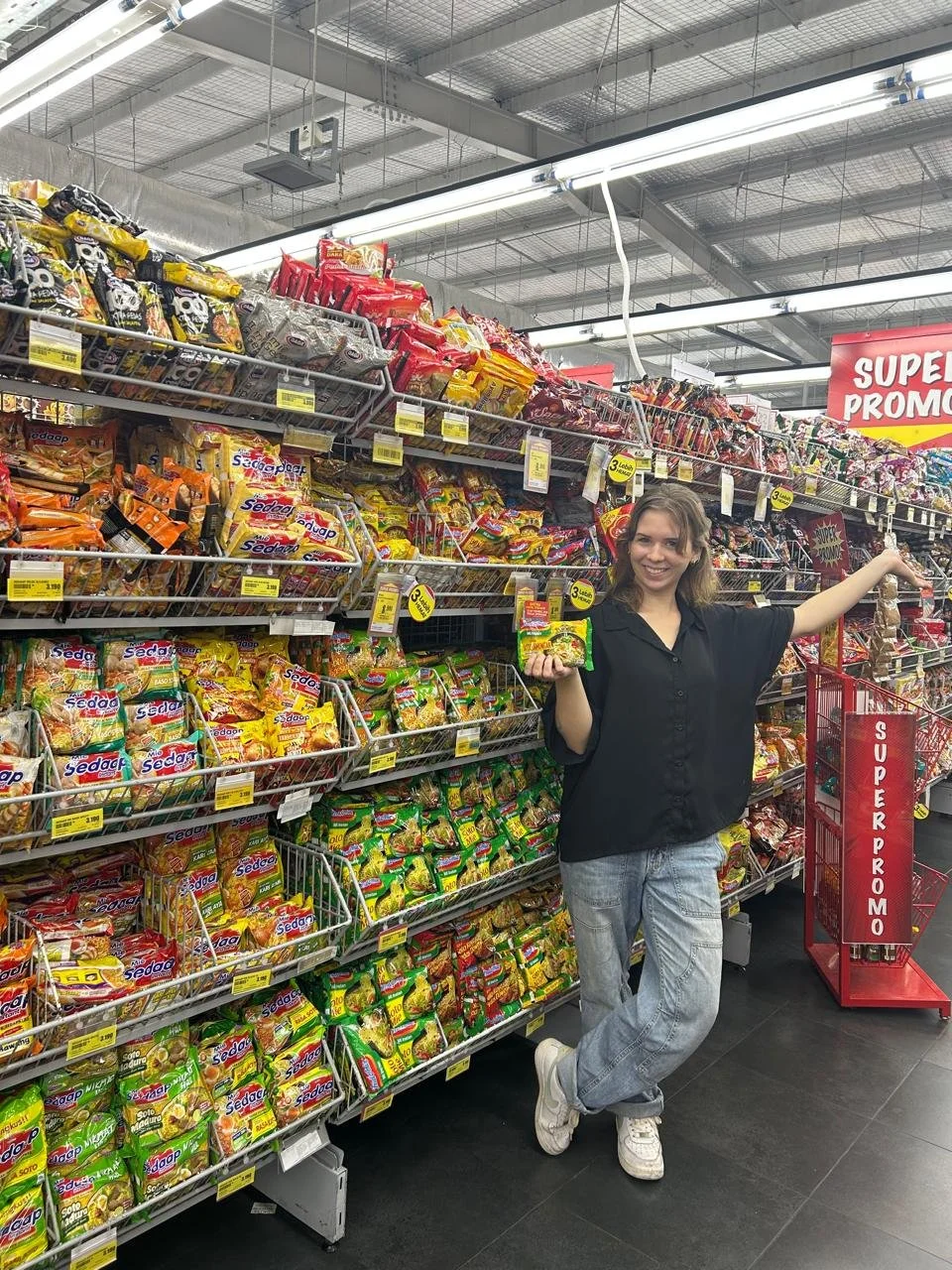
In the wonderfully extensive instant noodle aisle in my local grocery store.
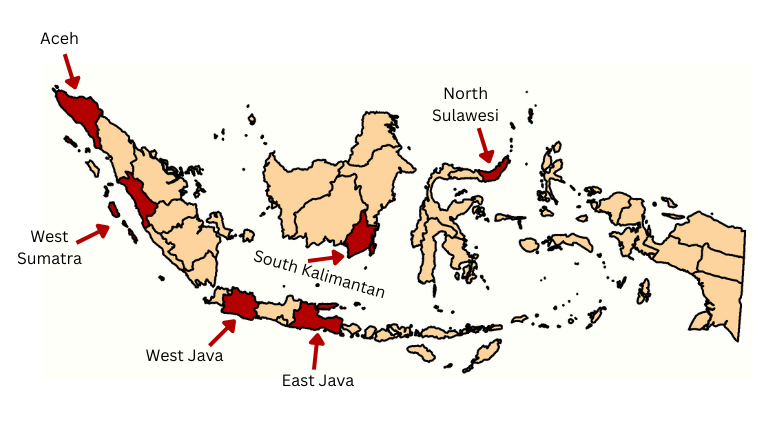
Map of the Indonesian provinces. The labeled provinces are represented in Indomie’s Kuliner Indonesia collection.
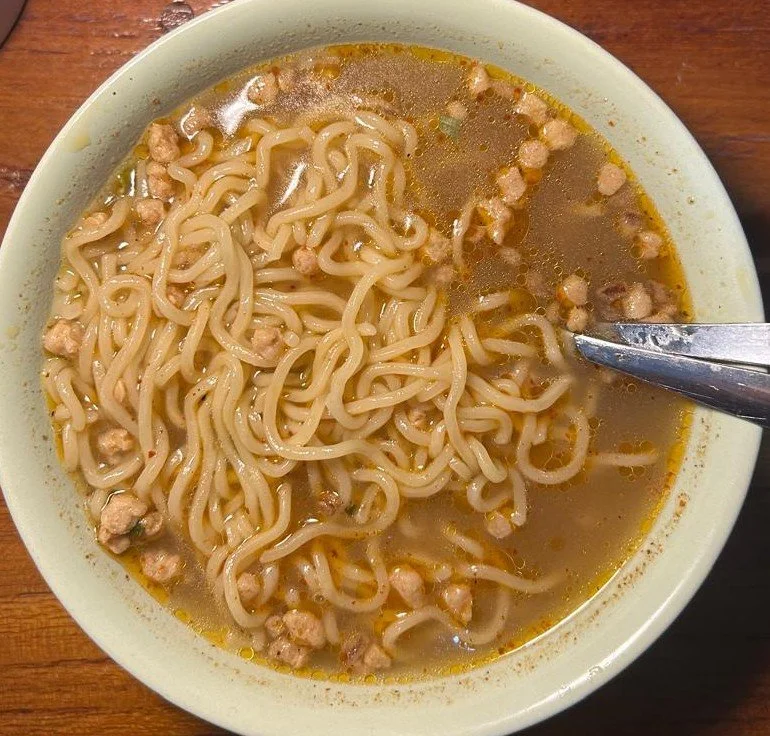
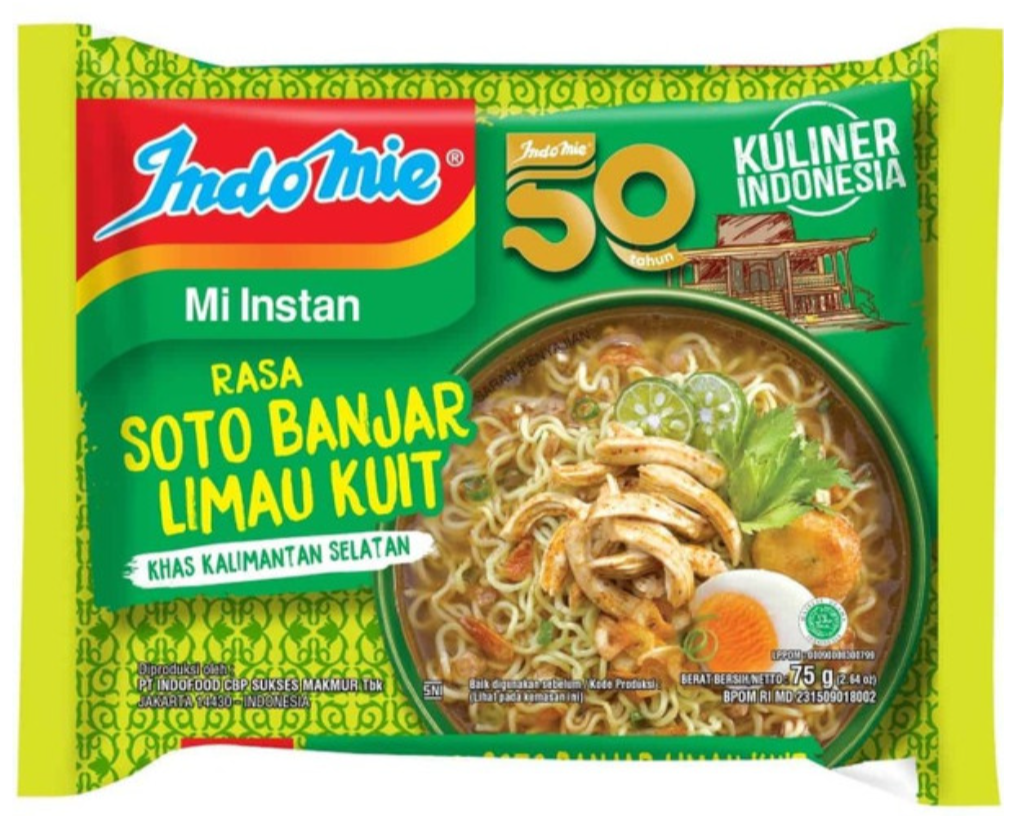
8th place: Soto Banjar Limau Kuit (Khas Kalimantan Selatan)
Notes:
Soto Banjar Limau Kuit is a chicken soup from South Kalimantan that people eat as a comfort meal. I have never tried the soup version at a South Kalimantan eatery; however, the Indomie version does not have much flavor—I only taste spice and mild lime. This experience has made me realize how rarely I eat food from Kalimantan. In my 1.5 years living in Indonesia, I don’t think I have ever had a meal that is a specialty of the massive island of Borneo. For my final six months in Indonesia, I now intend to try a greater plethora of Indonesian food.
Rating: 2/10
Since I do not often eat food from Kalimantan, I have limited familiarity with it; but ultimately I found this Indomie flavor disappointing.
The drawing in the corner features traditional Banjar house architecture of the Banjar people in South Kalimantan, Indonesia.
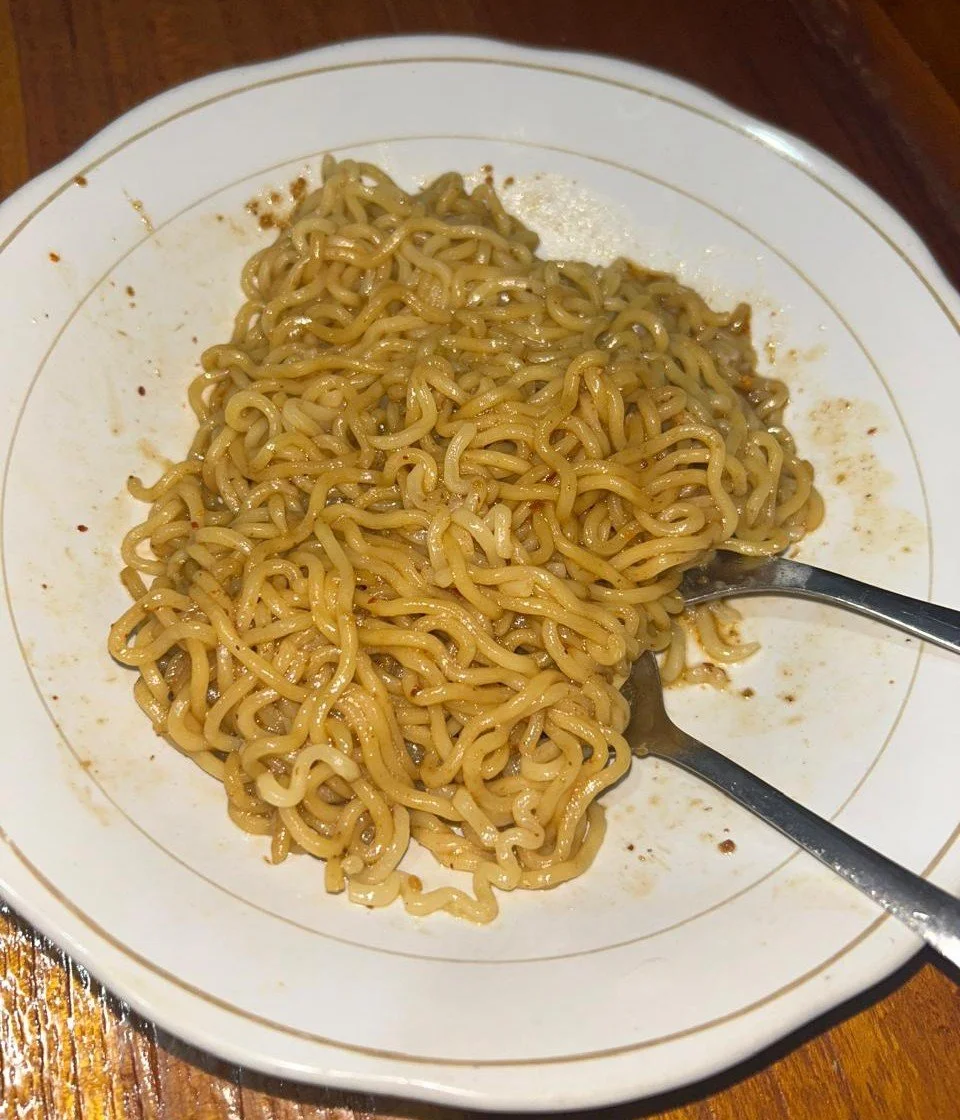
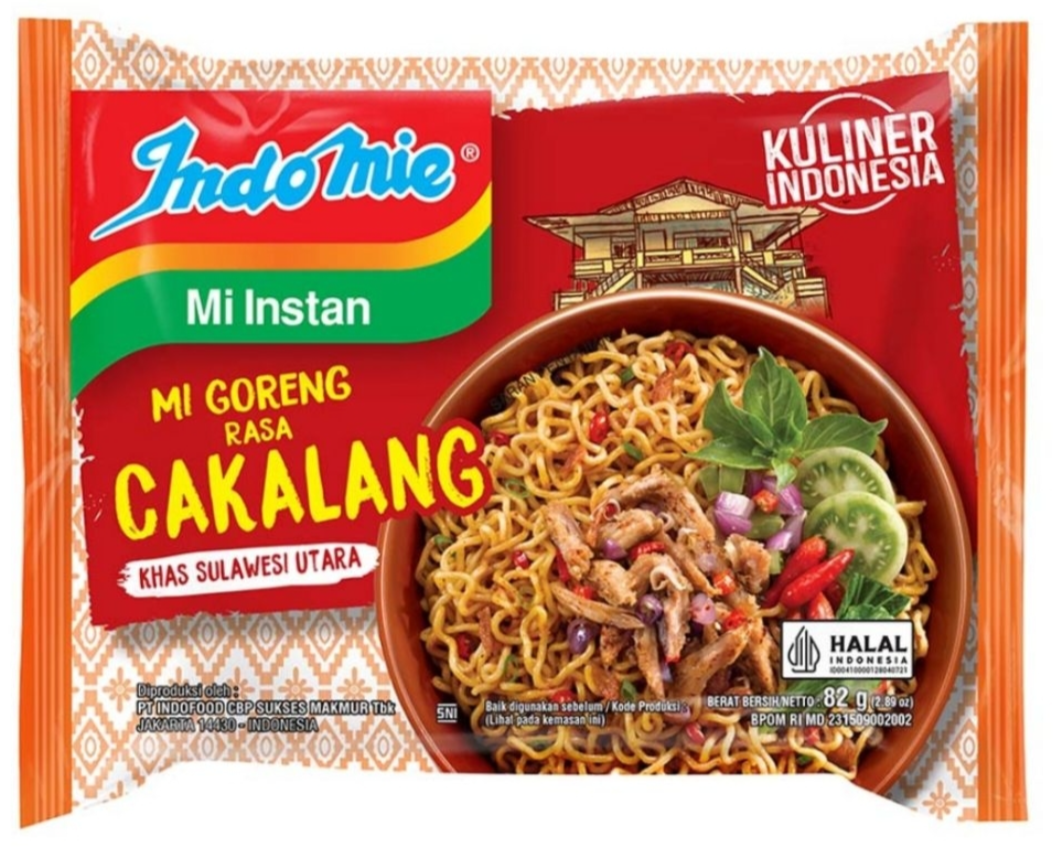
7th place: Cakalang (Khas Sulawesi Utara)
Notes:
Often eaten smoked over charcoal, cakalang is a type of tuna that is a staple of North Sulawesi cuisine. There is definitely a spicy kick to this one, as one would expect from Sulawesi food. When the flavors first hit my tongue, I was brought back to desperate times when I used cheap barbecue sauce packets to flavor plain pizza crusts. All that is to say that the flavors in this Indomie reminded me of cheap barbecue sauce. Before trying this Indomie, I did not know what cakalang was. I detected a hint of fish essence, but this Indomie did not taste strongly of fish.
Rating: 3/10
The barbecue flavor really threw me off. I do not want to eat barbecue sauce with noodles and will not be buying this one again. However, I now think I need to try some cakalang fish from Manado, North Sulawesi.
The drawing in the corner features traditional house architecture of the Minahasa people in North Sulawesi, Indonesia. This traditional stilt house is called Walewangko House (Rumah Pewaris).
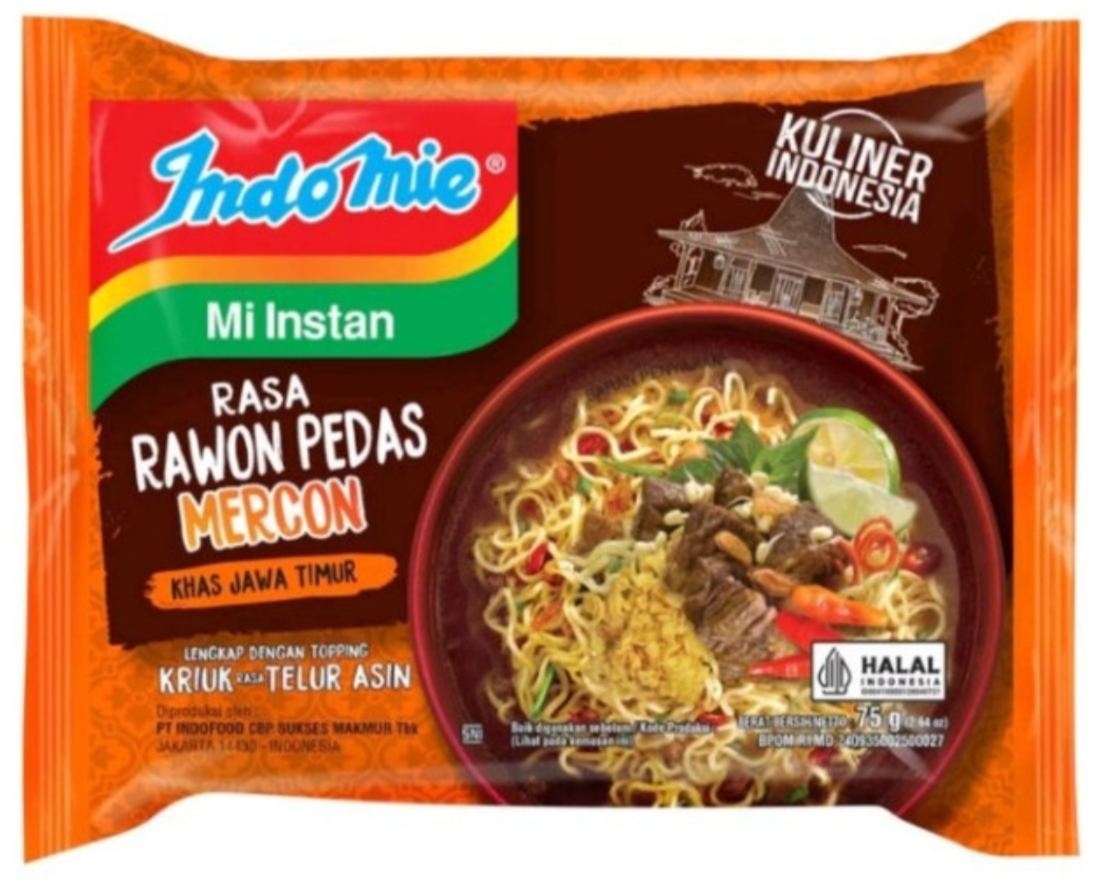
6th place: Rawon Pedas Mercon (Khas Jawa Timur)
Notes:
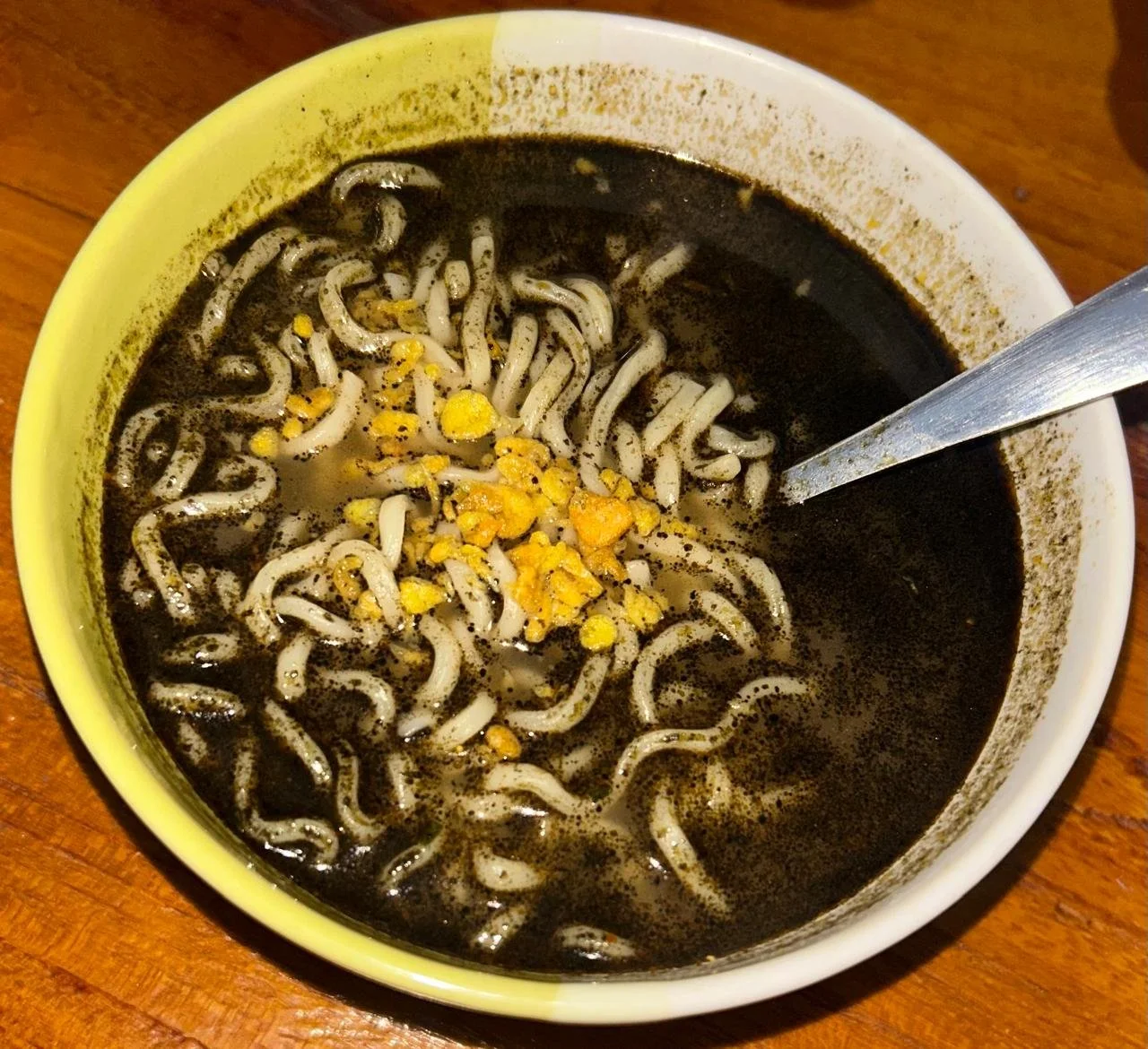
Rawon is a beef soup from the big city of Surabaya, East Java. When my family visited Bali and East Java, we ate super tasty rawon pecel (rawon soup with peanut sauce deliciousness) in Banyuwangi. For context, pedas = spicy & mercon = firecracker, therefore pedas mercon = extreme-level spice. This Indomie is spicy, but not unbelievably so. Instead, it is a really delicious kind of spice—one where I can taste the flavor of the chili pepper.
I am not going to lie, the seasoning packet for this one scared me a little. First, the packet was large, opaque, and gold when Indomie seasoning packaging is usually clear. Second, the contents were so dark that I was a little concerned it would turn my tongue black and taste artificial. However, my tongue survived unchanged, and the flavors did not taste any more artificial than usual.
Rating: 5/10
Considering how big the spice packet was and how dark the broth is, the overall flavor was surprisingly unexciting, despite the delicious chili peppers. I considered giving one bonus point for the salted egg-flavored mini chips, but am sad to report that they immediately melted into the soup and I could not taste their flavor.
The drawing in the corner features traditional architecture of the Javanese ethnicity in Central and East Java, Indonesia. This traditional building is called a Joglo House (Omah Joglo).
5th place: Empal Gentong (Khas Jawa Barat)
Notes:
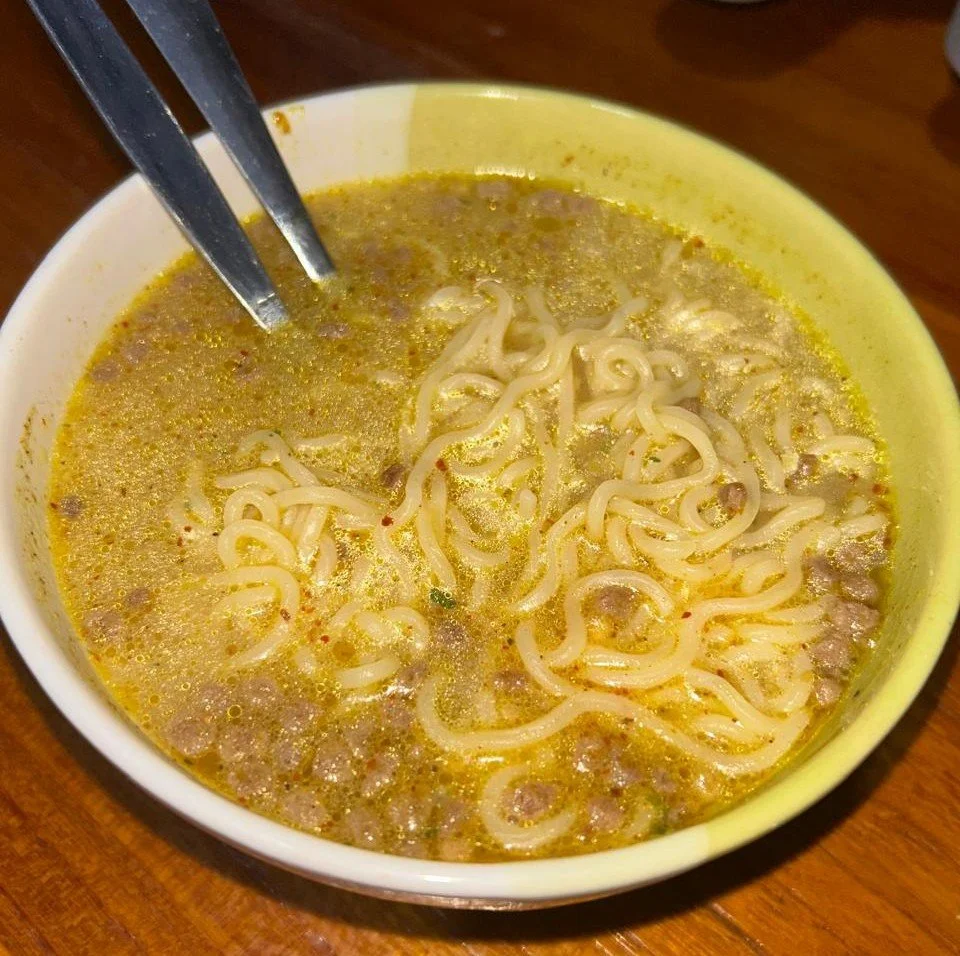
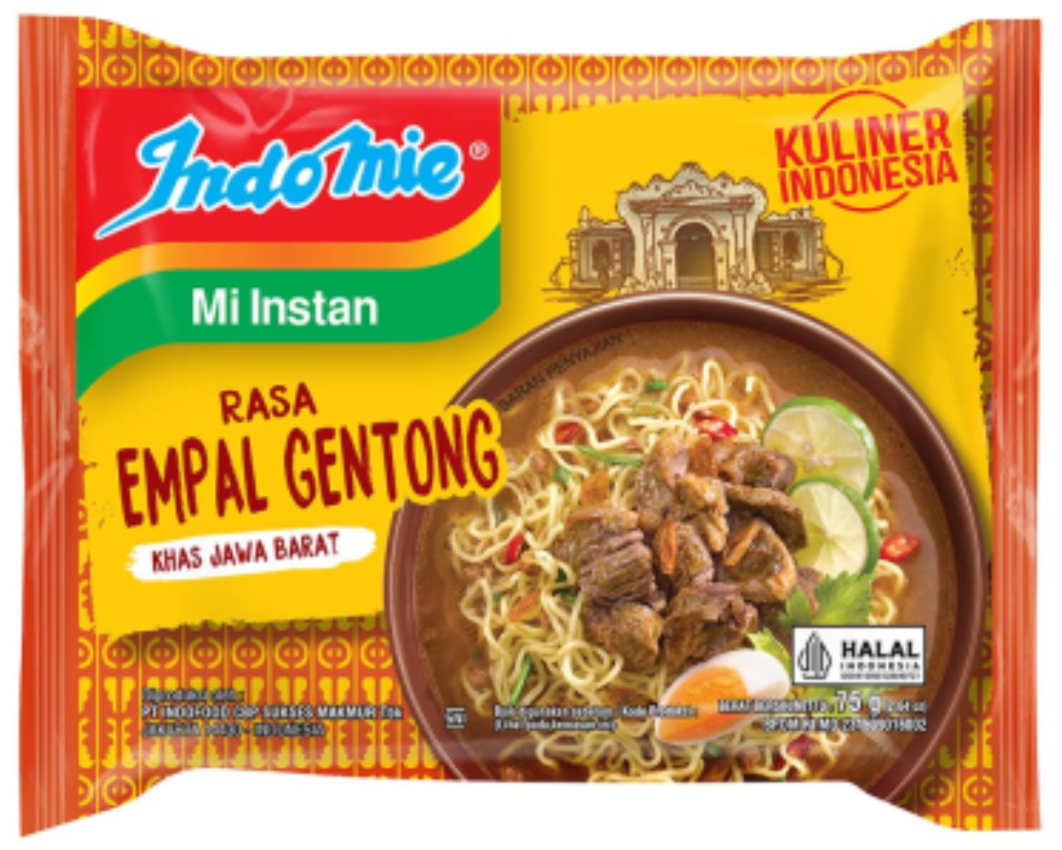
Empal Gentong is beef soup with a rich coconut milk broth hailing from West Java. Fun fact: the first time I tried Empal was at my friends’ wedding party (shout-out to Annisa and Tyo). Because they are both from Yogyakarta, which is not in West Java, I did not realize at the time that Empal is a West Javanese specialty, specifically originating from the Cirebon ethnicity.
I knew this one was going to be good the second I opened the seasoning packet. The beefy aroma hit my nose, and I immediately felt a grumbling in my stomach.
Rating: 6.5/10
If you know me, you know I love a good beef soup. This soup has a warm, curry flavor with a hint of lime. It reminded me a little bit of curry soups from Thailand. However, this Indomie doesn’t have as much flavor as I was expecting and tasted rather oily.
The drawing in the corner is of the residence of the Sultan of Kasepuhan (Keraton Kasepuhan) in Cirebon, West Java, Indonesia.
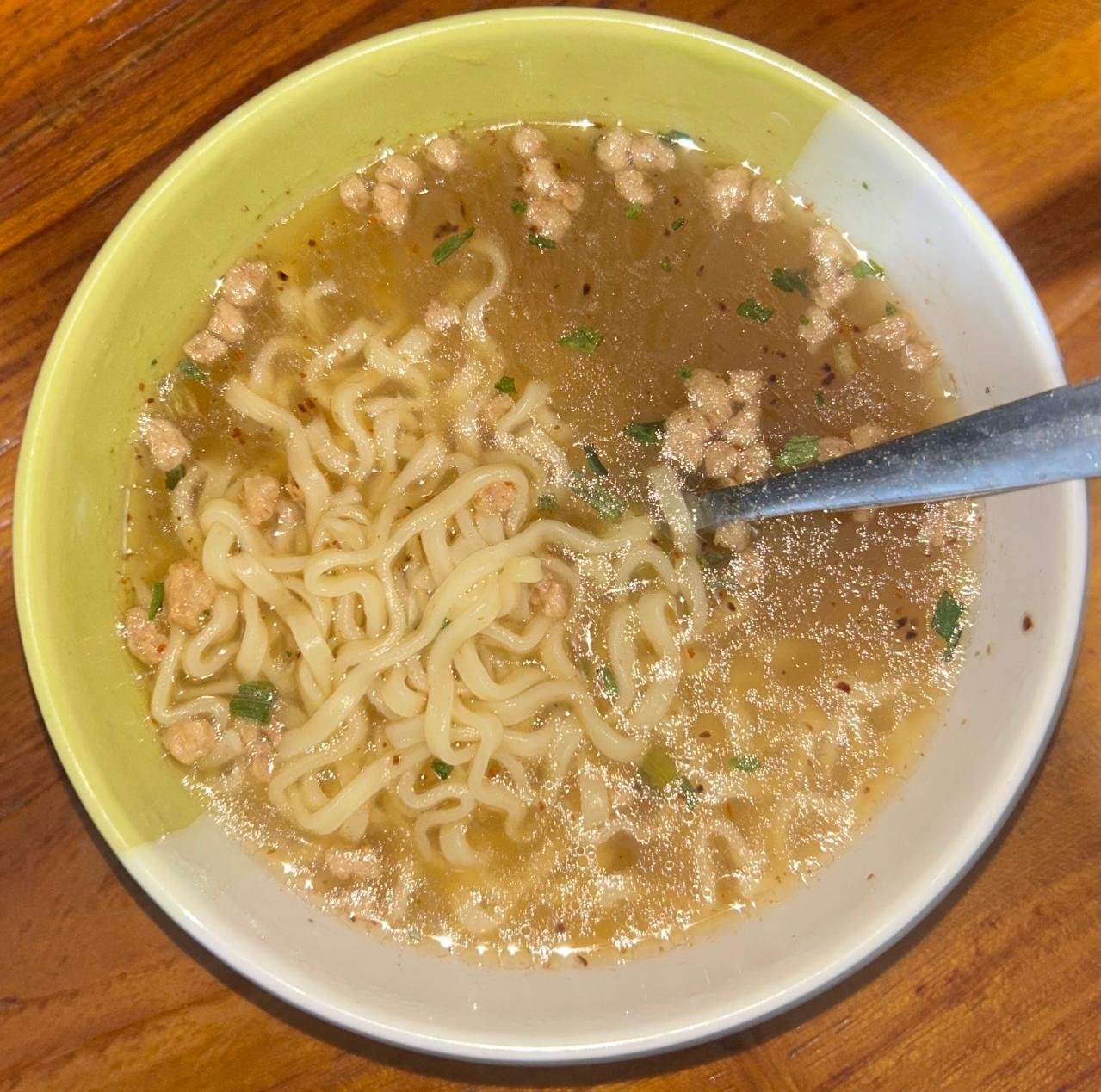
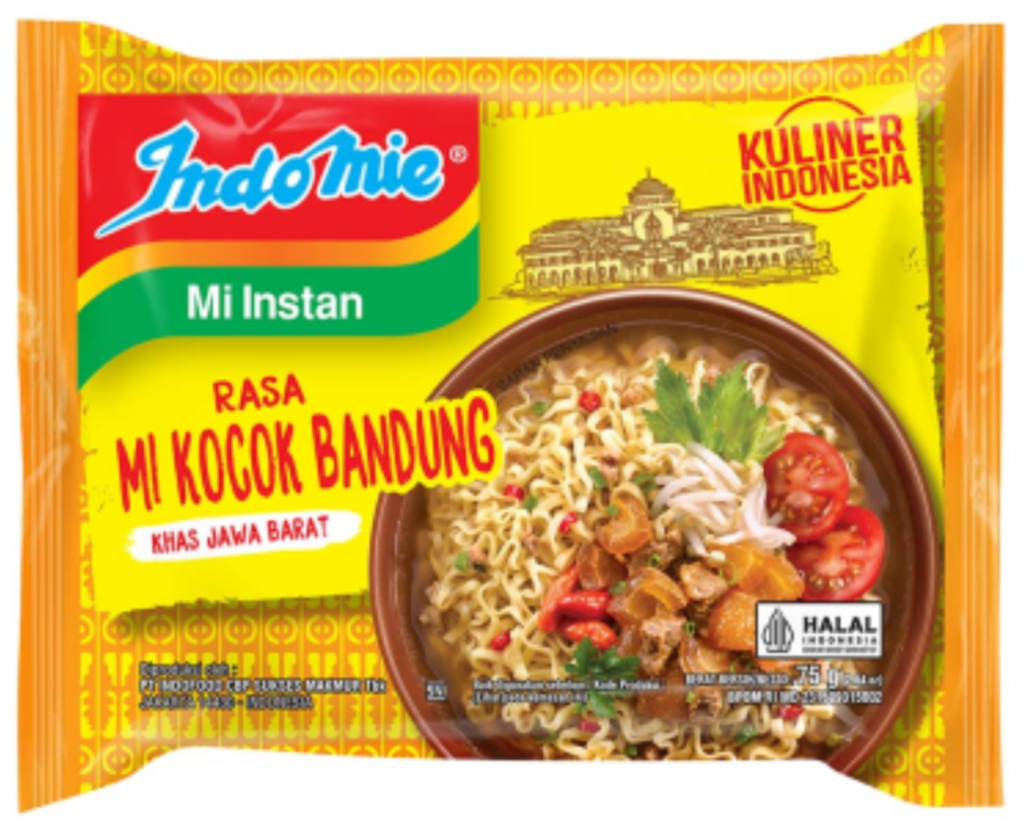
4th place: Mi Kocok Bandung (Khas Jawa Barat)
Notes:
Mi Kocok, which literally translates to “shaken noodles,” is a specialty dish of Bandung, West Java. Bandung is known for its Chinese influence, and there is a large ethnically Chinese–Indonesian population in the city. I once even had a Chinese international student friend say to me, “Hey, let’s take a trip to Bandung so that we can eat some good Chinese food!” (Chinese food in Yogyakarta is hard to come by and not very tasty.) I had never tried Mi Kocok before, but I immediately tasted the Chinese influence. It reminded me of wonton soup, with a light, salty broth.
Rating: 8/10
I was not expecting to like this Indomie as much as I did. For whatever reason, the picture on the front of the package did not look enticing. As it turns out, it is delicious! My only complaint is that the soup is a little oily.
The drawing in the corner is of Gedung Sate in Bandung, West Java, Indonesia. Built during the Dutch colonial era, it is now the office of the governor of West Java as well as a museum.
3rd place: Aceh (Khas Aceh)
Notes:
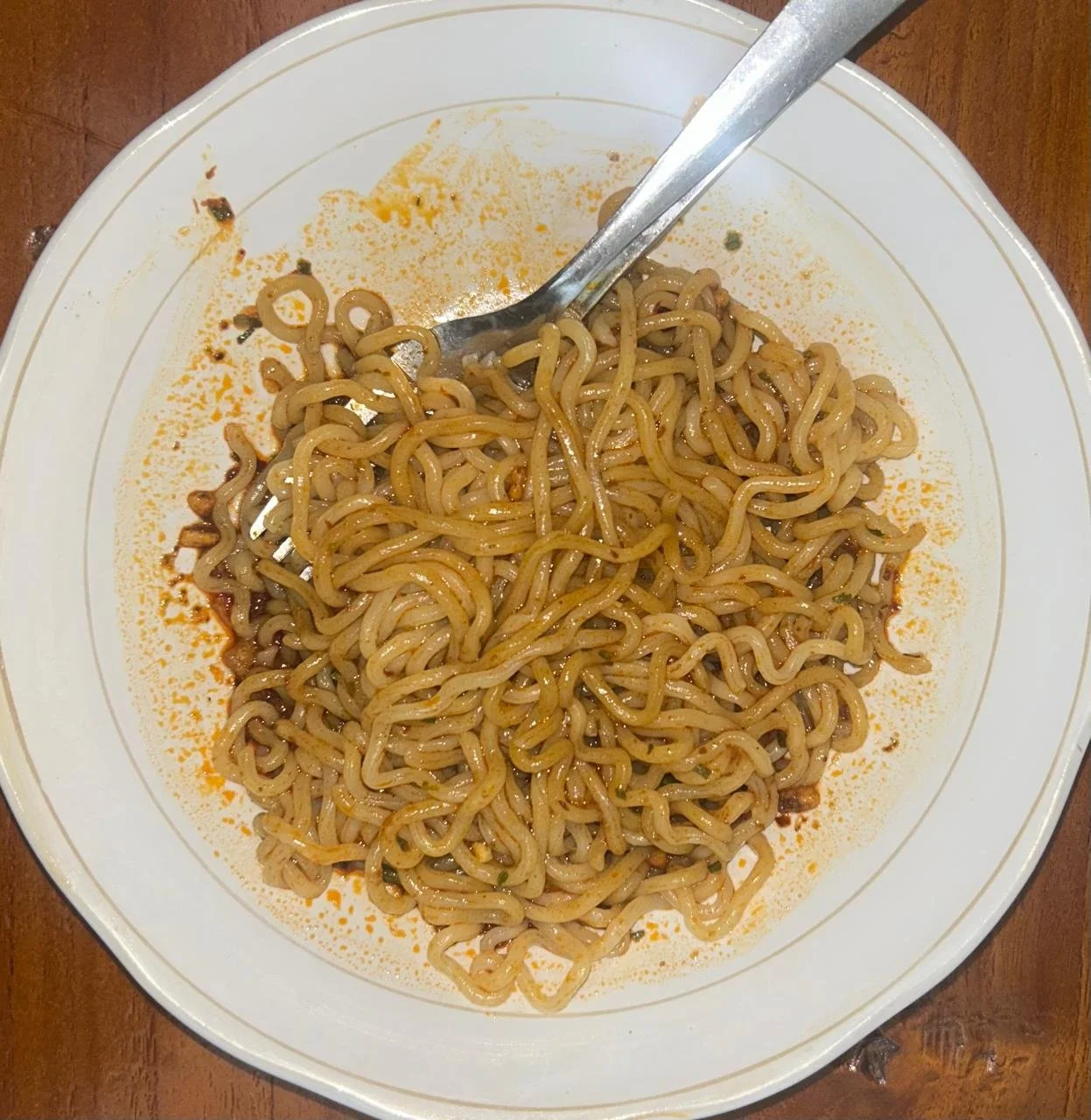
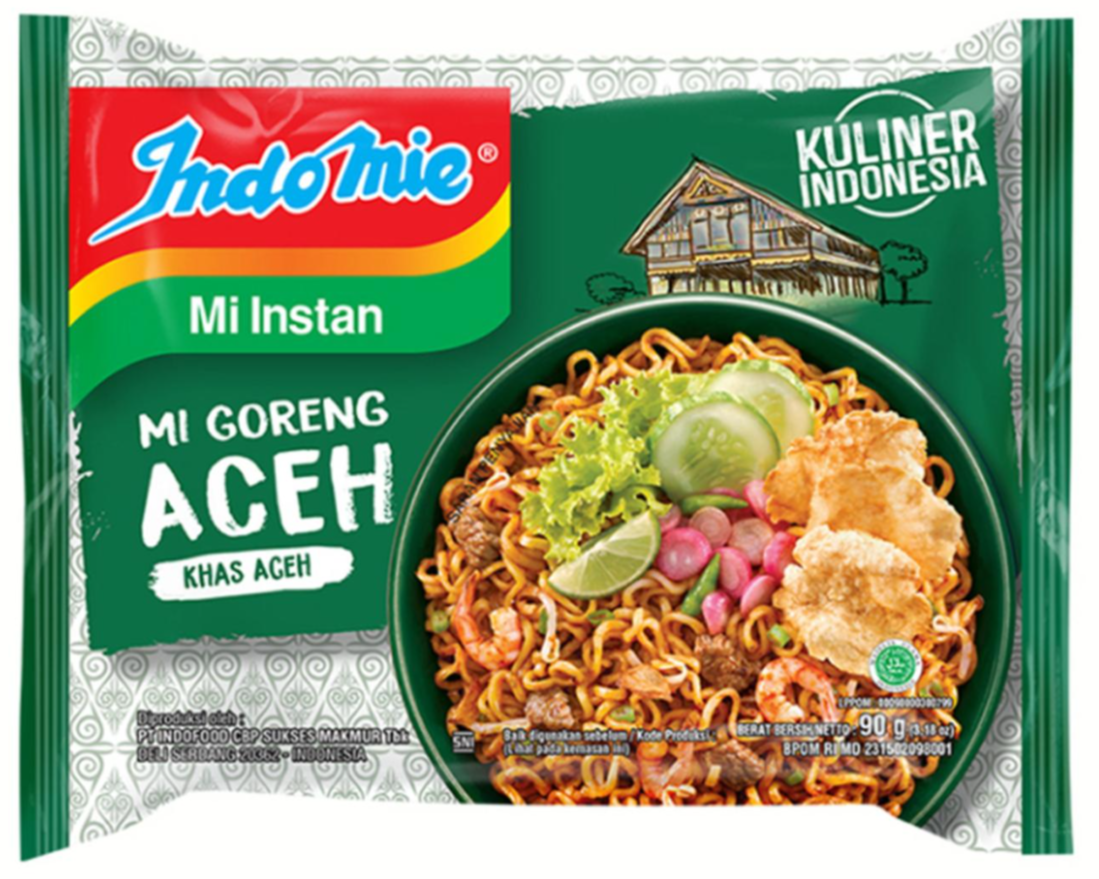
This Indomie is based off of the famous Mi Aceh noodle dish from the Aceh Province in Sumatra. I have yet to try Mi Aceh. Because I will be visiting Banda Aceh in a couple of months, I figured why try mediocre-tasting Mi Aceh in Yogyakarta when I’ll be eating the good stuff soon?
Since I do not know much about Mi Aceh and its ingredients, I did not have high expectations going into this. But I am happy to report that I was pleasantly surprised. I actually should not have been surprised, given that Gavin and Ted often talk about how Banda Aceh has some of the best food among all of the Shansi sites.
Rating: 8.5/10
I rated this one an 8.5 because of the strong, bold flavors unlike anything else, including the spicy kick (even when I didn’t add the entire chili packet). However, it is extremely oily. Next time I make this Indomie, I will only add half of the oil packet.
P.S. Shout-out to my co-fellows in Banda Aceh, Yana and Trevor. I am thinking of you guys as I enjoy this Indomie.
The drawing in the corner features traditional Acehnese house architecture of the Acehese people in Aceh Province, Indonesia. This traditional house style is called Rumoh Aceh.
2nd place: Rendang (Khas Sumatra Barat)
Notes:
Rendang is a slow-cooked beef dish originating from the Minangkabau ethnic group of West Sumatra. In case you didn’t know, this iconic Indonesian dish was rated as the world’s number one food in a 2017 online poll by CNN Travel. For this one, I give kudos to Indomie for maintaining the original spicy kick of chili and tumeric, the strong aromatic flavors of ginger, shallots, and garlic, along with the creamy sweetness of coconut milk.
Rating:9/10
Although I would strongly recommend going to your closest Nasi Padang buffet for rendang, when you’re feeling lazy and craving slow-cooked beef, Indomie’s rendang will do as a quick alternative for only 25¢ a packet.
As I mentioned in the introduction, the drawing in the corner features traditional architecture of the Minangkabau people in Padang, West Sumatra, Indonesia.
P.S. This is my junior fellow Ella’s favorite flavor of Indomie.
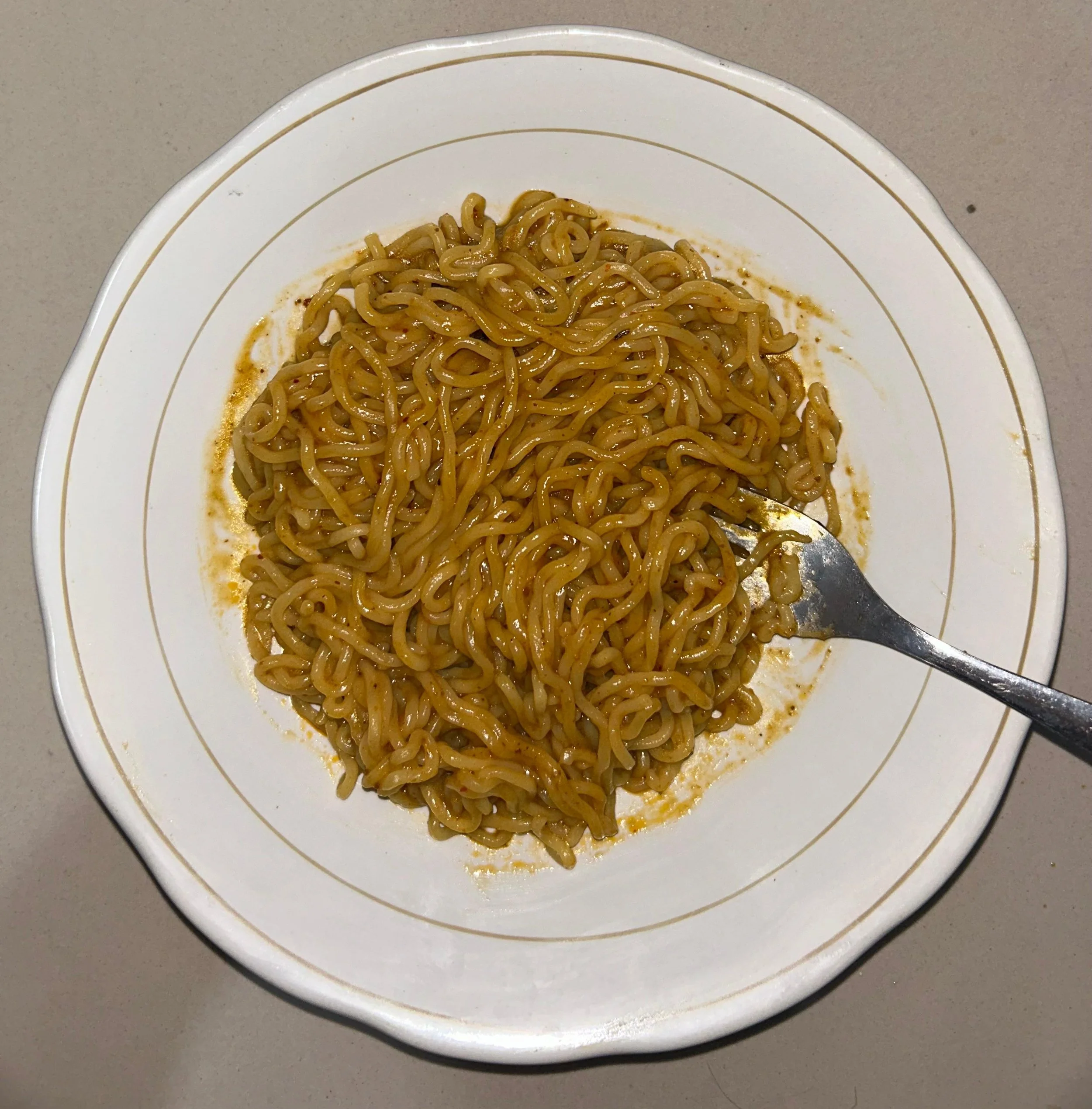
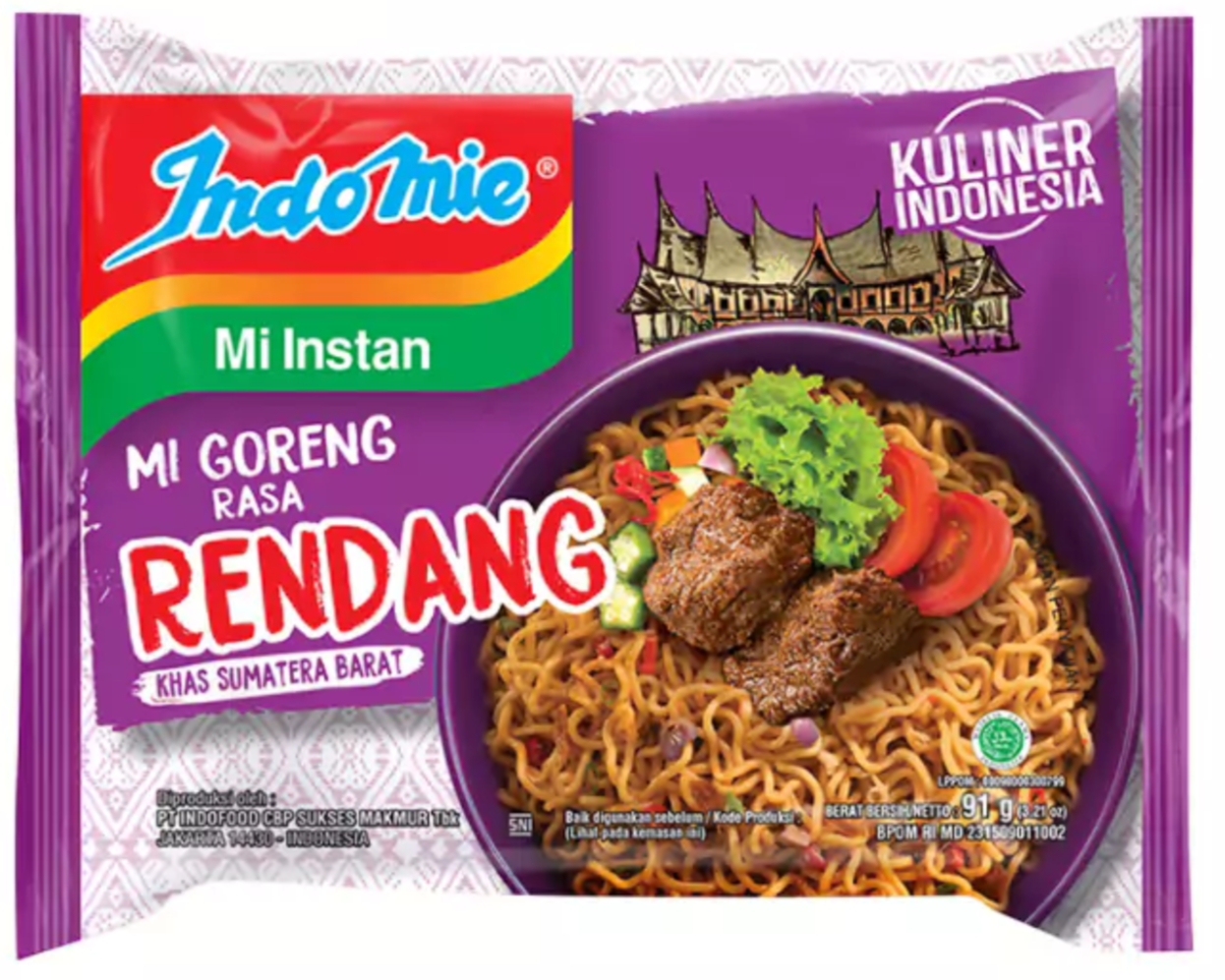
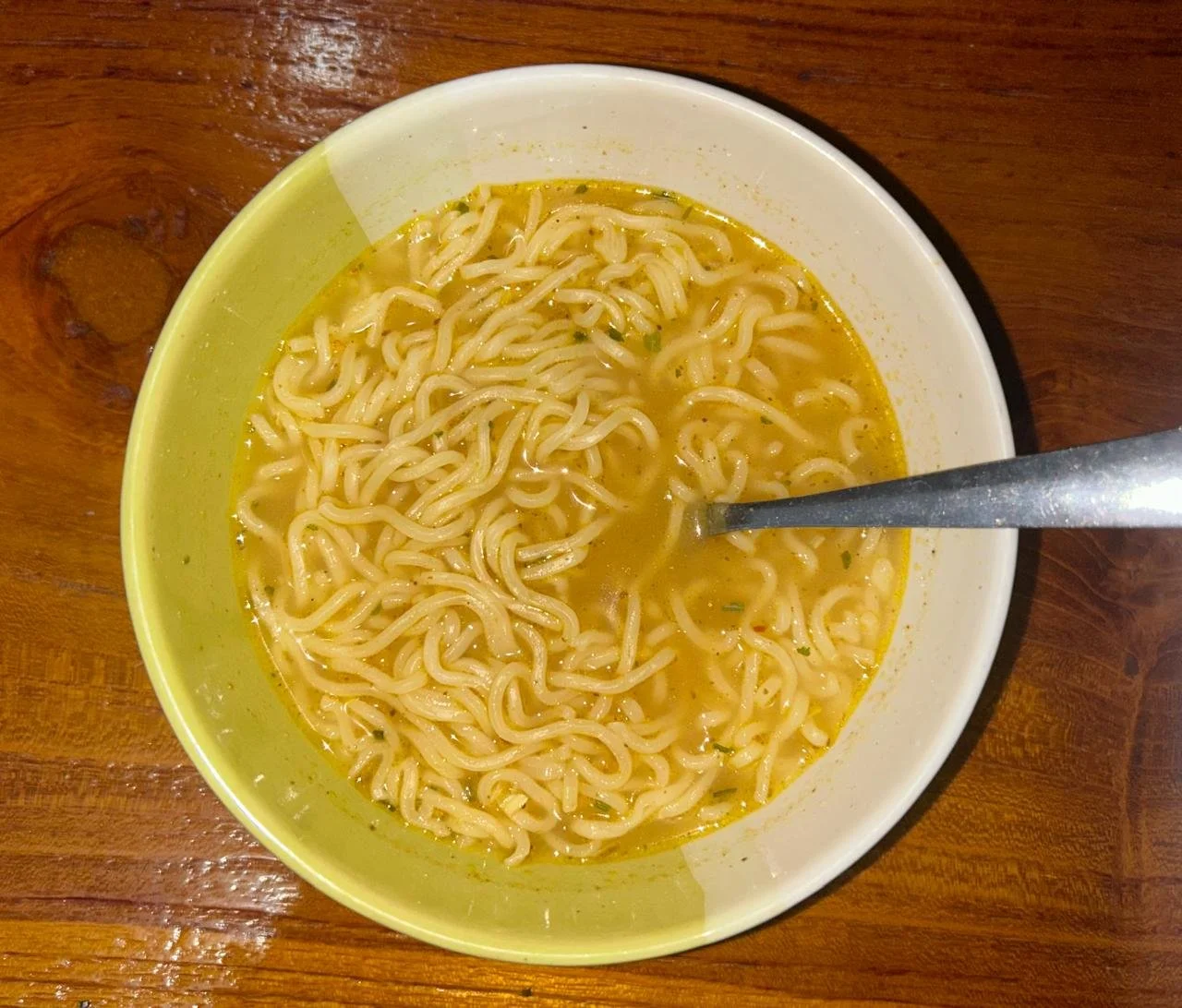
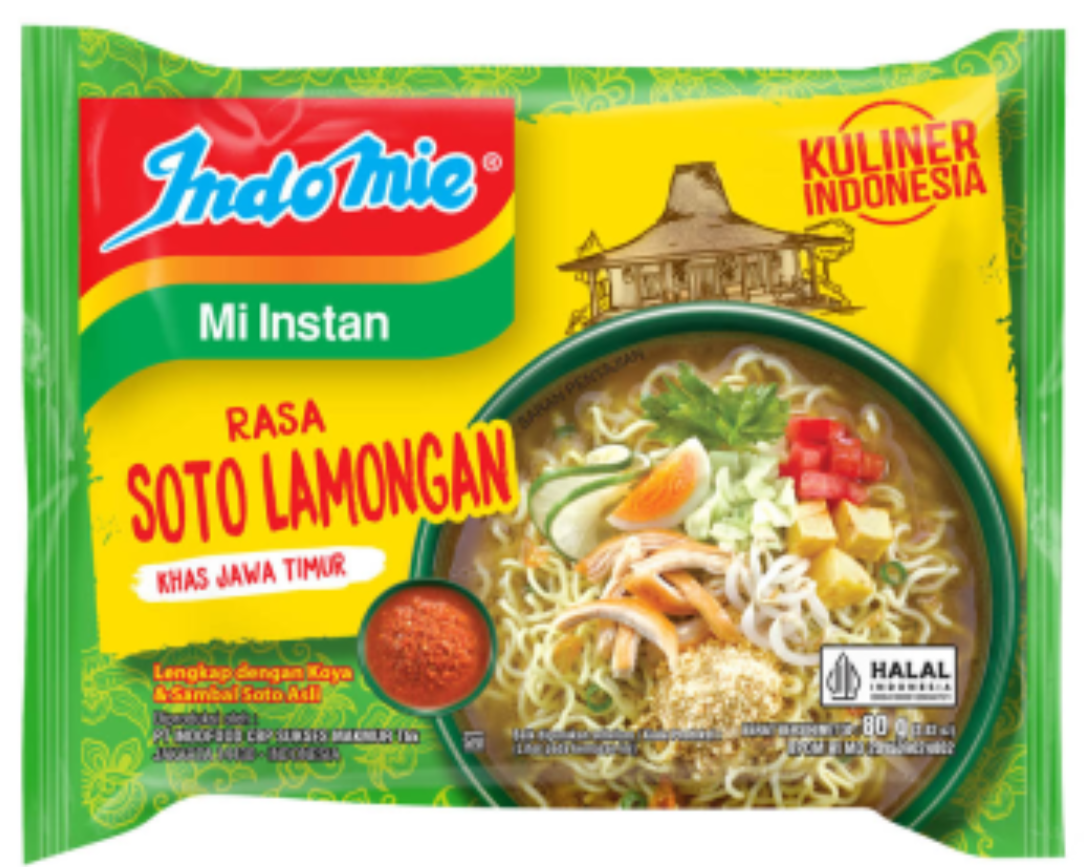
1st place: Soto Lamongan (Khas Jawa Timur)
Notes:
Yum! This Indomie is DELICIOUS. Solo Lamongan is an iconic chicken soup from Lamongan, East Java—I often eat it for lunch in the UGM canteen. The moment I first slurped up the noodles of this Indomie, I immediately tasted lime. The more bites I ate, the more I was reminded of those ‘hint of lime’ tortilla chips from back home. Call me basic, but this has everything I want in an Indomie– a burst of flavor, warmth, and a feeling of satisfaction.
Rating: 10/10
The numbers speak for themselves.
The drawing in the corner features traditional architecture of the Javanese ethnicity in Central and East Java, Indonesia. This traditional building is called a Joglo House (Omah Joglo).