

Patience and 慢走 (Walking Slow)
By Nissa Berle ‘23, Taigu Fellow 2024-2026
Throughout my time in Asia, I’ve experienced an incredible amount. I’ve cheered on my friends during campus dance, badminton, and volleyball competitions, judged speech and dubbing competitions, hosted holiday celebrations, and taught my friends to ski. With other fellows, I’ve experienced breathtaking views during a motorbike tour in northern Vietnam, rode to an overlook during the sunrise and moonset in Kotagiri, and ran the Great Wall Marathon Fun Run. In South Korea, I ate the best fried mackerel from the sweetest street market vendor (and another customer even shared his live squid with us), in Harbin I finally had lamb I genuinely found delicious (instead of just okay), and throughout China I’ve had many, many servings of amazing 红烧肉 (braised pork). Looking back, it all feels like an incredible whirlwind, one exciting experience after another. Yet, in reflection, I’m drawn to the slower moments.
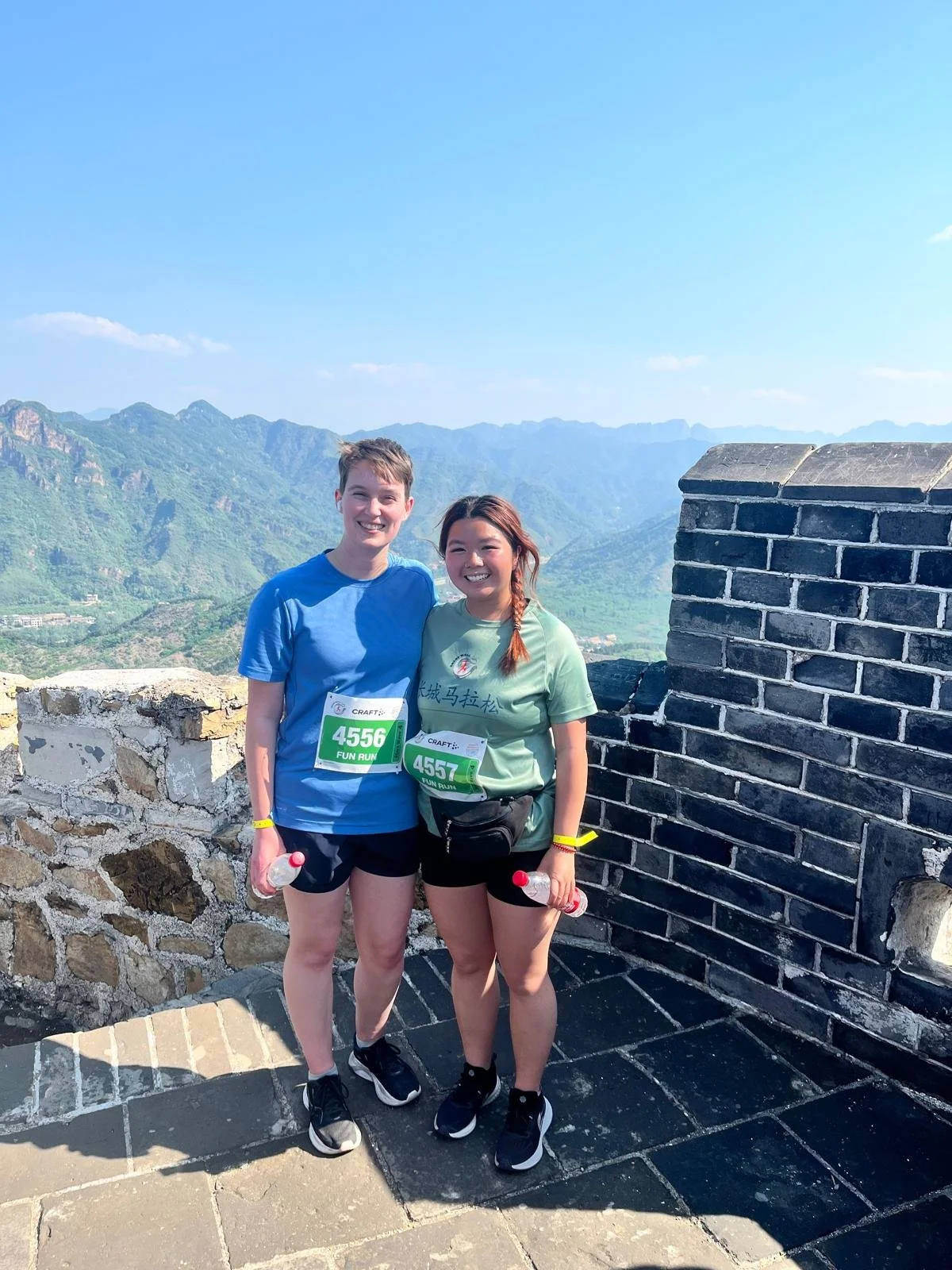
Me and my senior fellow Tiffany at the Great Wall Marathon Fun Run - Huangyaguan, China; May 2025
I am not a patient person; when I have a goal or location in mind, I’m restless to reach it. Living slightly off-campus last year, I always peddled at top speed on my too-short bike, ignoring any ragged breath and elevated heart rate. But cultural exchange—and language teaching especially—requires patience. I found I needed to count in my head to provide my students enough processing time before asking them to answer the question. Early on, I used strategies like this as tools to suppress impatience, and while I have developed more intrinsic patience during my time in Taigu, I wouldn’t go so far as to say I’m now a patient person. I can, however, release a breath and remember how even the smallest moments of patience made me feel the warmest and most connected.

Going skiing in Taiyuan with SXAU friends - Taiyuan, China; January 2026
Last spring, a 上海小笼包 (Shanghai steamed bun) family-owned restaurant opened just outside of campus and quickly became one of our go-to places, despite some embarrassing moments early on. Often, when I was ordering, I found I spoke too slow and with too-long pauses between dishes that the staff member I think of as 弟弟 (little brother) would nod and walk away in the middle of my order and I would end up practically chasing him around the restaurant, internally going “Wait! No! Please! Help!” and laughing at myself. Eventually, to make the process easier for all of us, I wrote down our order in my notes app and showed it to him all at once. About a month later, I started ordering out loud again and noticed he’d slowed down for me. He would nod in acknowledgment during each pause while I ordered, but would wait until he was sure I was finished before moving on. It took us time to learn how to interact successfully, but his willingness to be patient with me makes me leave every interaction feeling understood and appreciated.

Ice sculpture created by an American and Mongolian team at the Snow and Ice World in Harbin - Harbin, China; January 2026
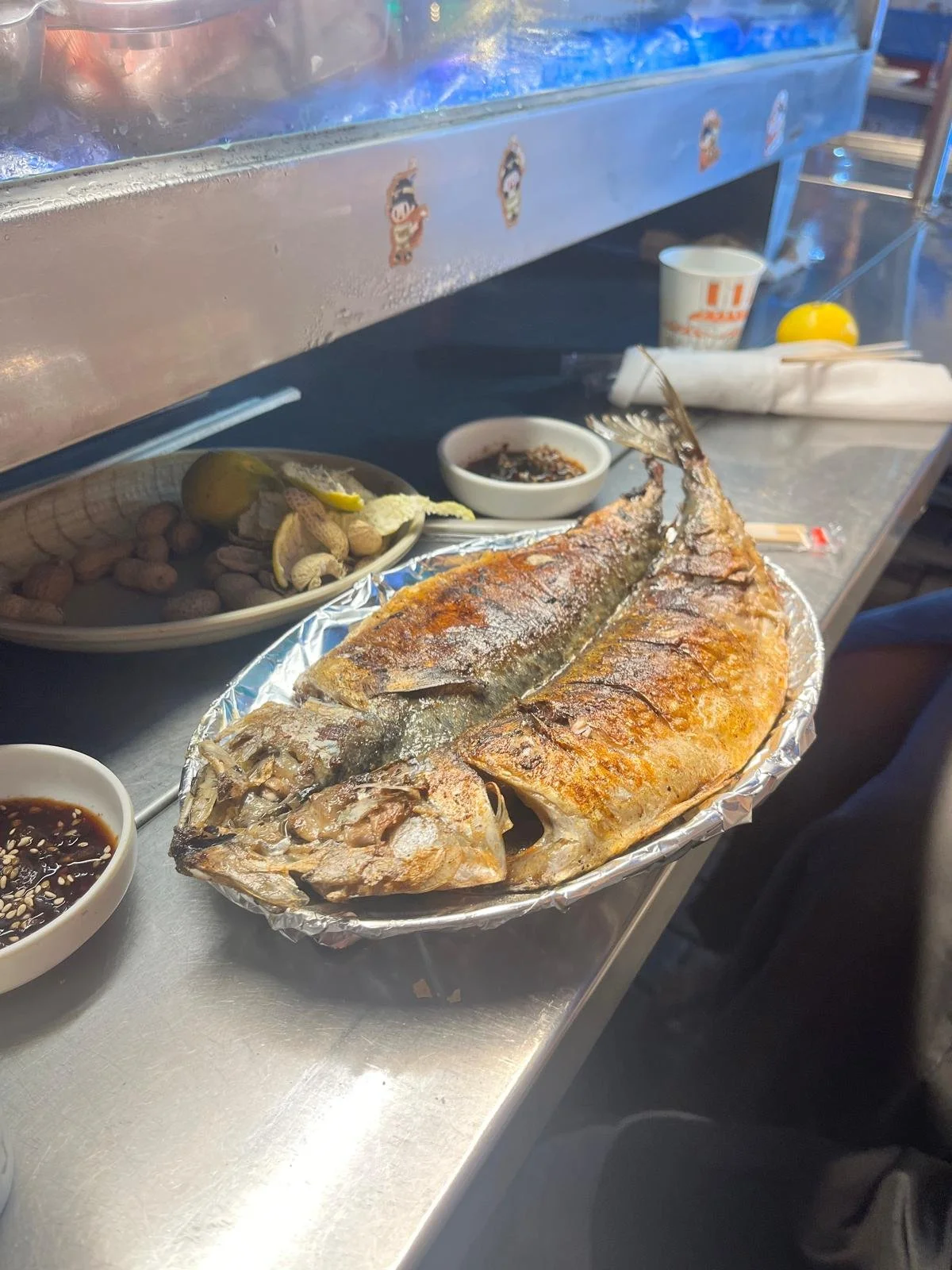
Fried mackerel from a night market in Busan - Busan, South Korea; October 2025
Once during my first year, I went to Go Rice, a self-serve buffet in 谷园(the main dining hall) at the end of a long week when I was exhausted—physically, mentally, and linguistically. The Go Rice staff had always been sweet and kind, and it was a simple process to get food in my drained state, so I thought. When I was almost finished 打包-ing (“’packing to take out’-ing” in Taigu-fellow Chinglish), one of the ladies said something to me I couldn’t process a single word of. She repeated herself but my brain was so melted that day I still couldn’t parse it. So she broke up her instructions: “给我”(“give me [your tray]”) and “拿筷子”(“Take chopsticks”). By repeating herself multiple times rather than simply taking my tray and handing me chopsticks, I felt respected and valued.
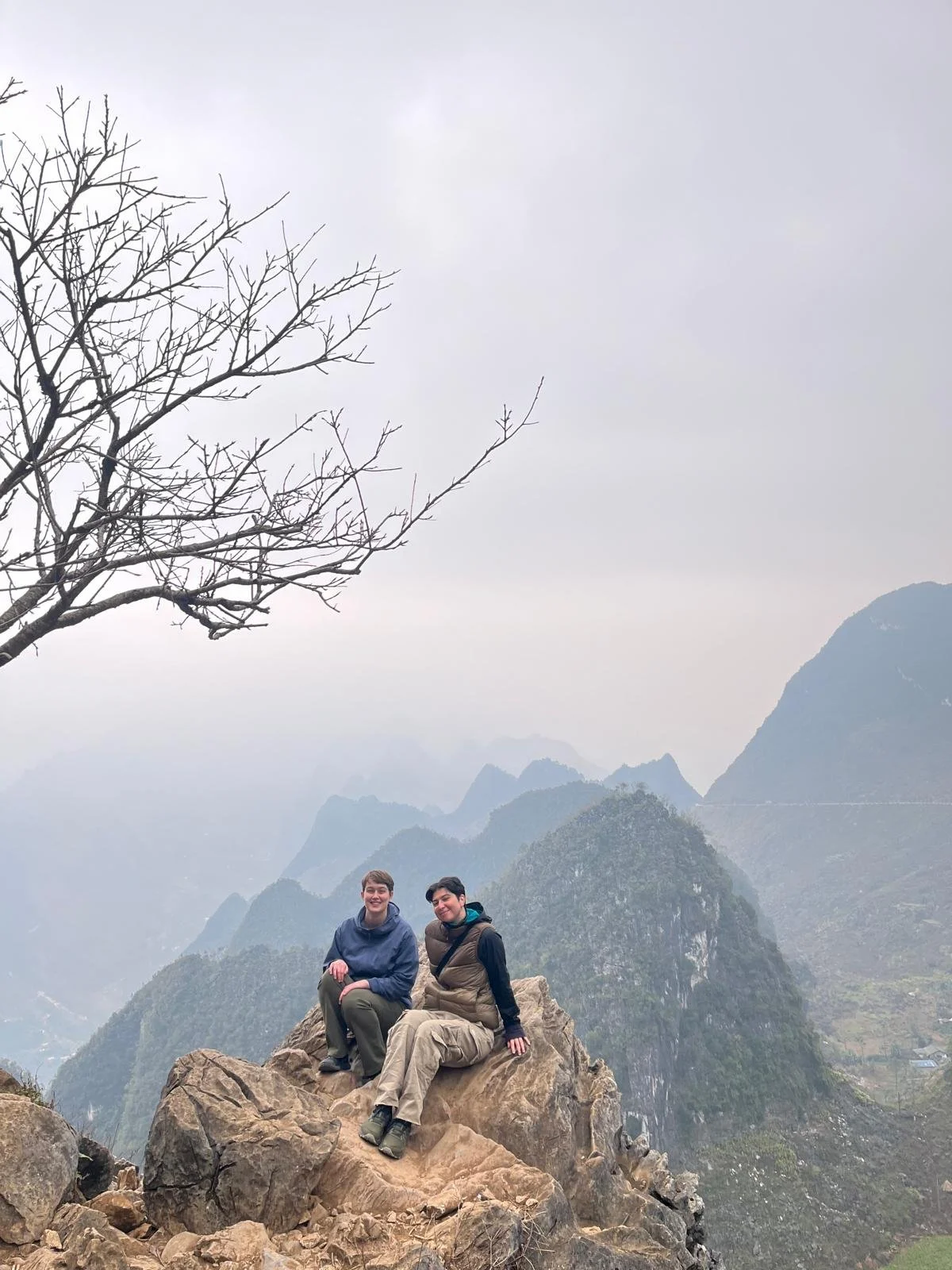
Me and Sophie (Kotagiri fellow) at an overlook during our Ha Giang loop moterbike tour in Vietnam - January 2025
I’ve often found myself saying “Everything takes longer in Taigu.” Even after a year and a half of living here, I still need to estimate how long an errand will take and then add an extra two hours before scheduling other plans. Going to the store, for example, involves more than driving and shopping. Often included is a leisurely meal with friends, lesson planning at a cafe, people watching, buying date cakes, ordering lemon water from Mixue, or exploring a new store. Then, on the return trip, I must balance my bags carefully on an e-bike and navigate the organized-chaos of traffic. And in the end, I often need time to rest after all the cultural and linguistic navigation (or, sometimes, a food coma). It can feel like one chore takes up the whole day, but having the patience to not reach for the immediate goal (i.e., buying groceries) has helped me appreciate 慢走 (walk slow). 慢走 often said as a farewell, and is a mentality that can be seen in friends pausing to chat on their way to or from class or the library, retirees sitting together outside enjoying each other’s company, and the afternoon 休息 (rest period) Shanxi Province is famous for, where restaurants and businesses close and many people take a nap.
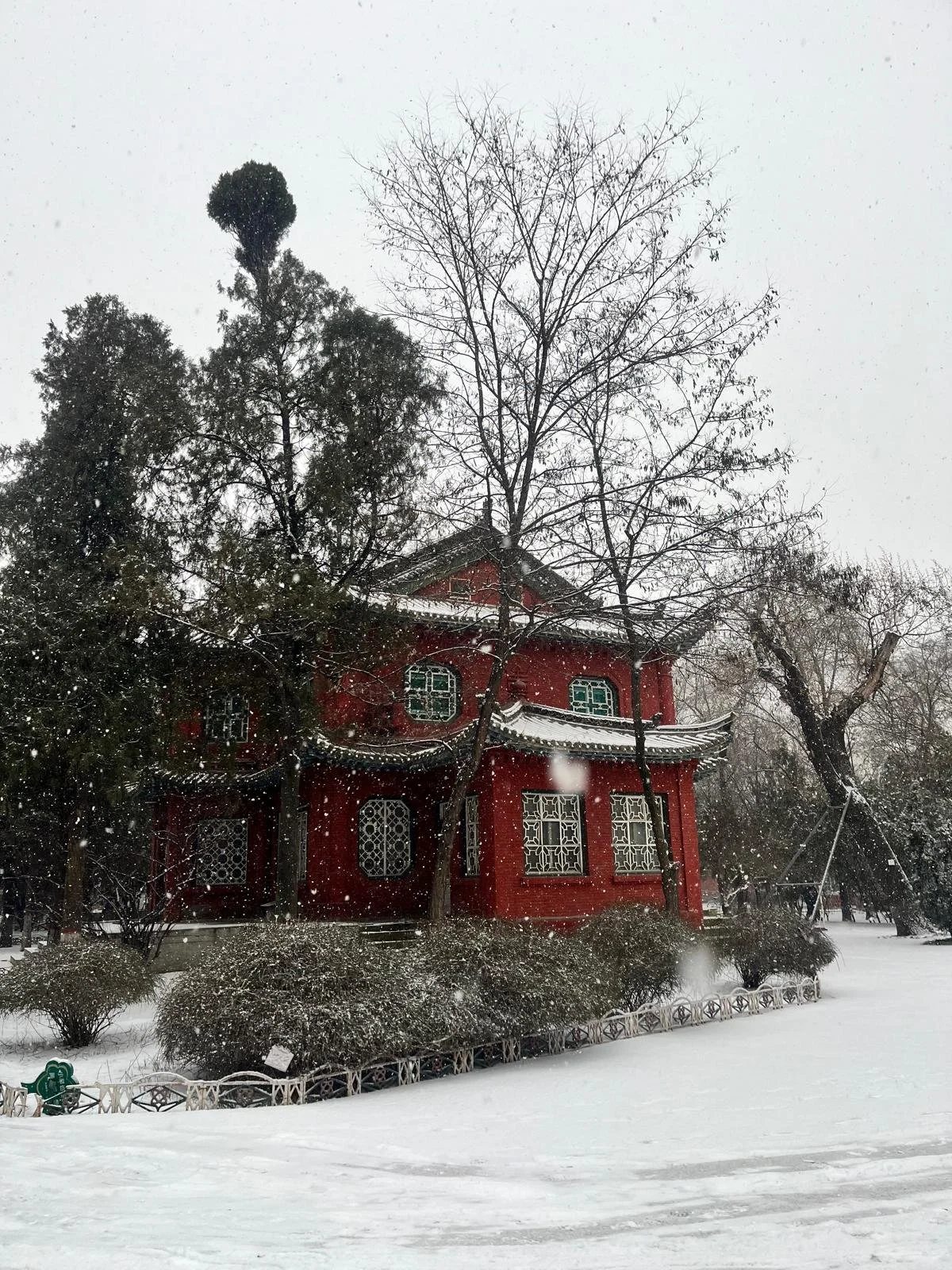
Copying students who found a great angle of a building near our houses during the first snowstorm of the year - Taigu; December 2025
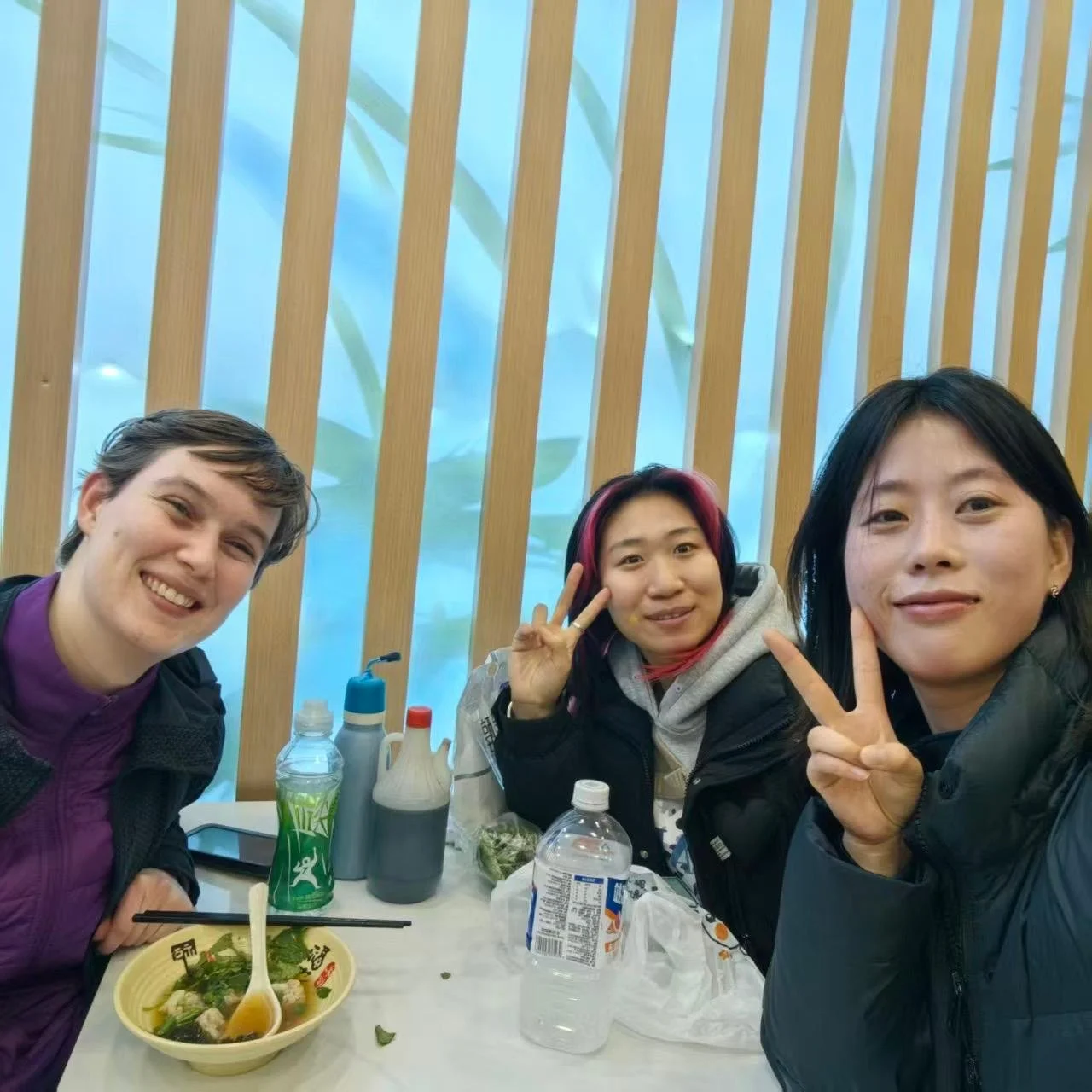
Getting post-run soup at the 上海小笼包 (Shanghai steamed bun) resturant - Taigu December 2025
Learning to “walk slow” as the impatient person I am has been a process, but this year I’ve left my bike behind and took in more of the journey to class, on errands, and with friends. I love just walking to the dining hall with my co-fellows, seeing students taking photos (and agreeing that it was an amazing angle and copying them), and my friend pausing to use her phone translator to be sure I fully understand and am included in the conversation. I love the meals of hot pot, BBQ, and stone pot that are at least two hours long and filled with learning and laughter. I didn’t expect to learn how to be patient and slow down when I came to China, but the slower moments are where I’ve learned and enjoyed the most, and I’m grateful for the friendships mutual patience has created.

The sunrise in Dunhuang, China - July 2025