

Forget the name, remember the feeling
By Trevor Smith ‘25, Syiah Kuala University Fellow 2025-2027
It is nearly noon. My co-fellow Yana and I have already been driving for nearly six hours through the sloping roads of rural Aceh. Overhead, the gray sky only makes the dense tangle of flora that lines the mountainside even more vibrant in its greenness. It's all new to me. The high hills that peer out over swaying palm leaves. The tiny street vendors with dust caked signs. The odd monkey or two who dash across the pavement with their wide eyes and long tails.
Occasionally, as we drive we pass by large trucks, my knuckles turn white clutching the back of the bike as we veer around them. Each of them, a daunting rusted giant looming over our heads, the last thing that you would expect to hold any ounce of wisdom (except for maybe keep your eyes on the road and your finger on the horn). But on the mud flaps of one of those trucks was scrawled an Indonesian phrase in turquoise ink : “Forget the name, remember the feeling.” It was a strangely comforting thing to read. After only a few weeks of being in Aceh, I had already forgotten more names than I had remembered. Names of new places, new people, new foods.
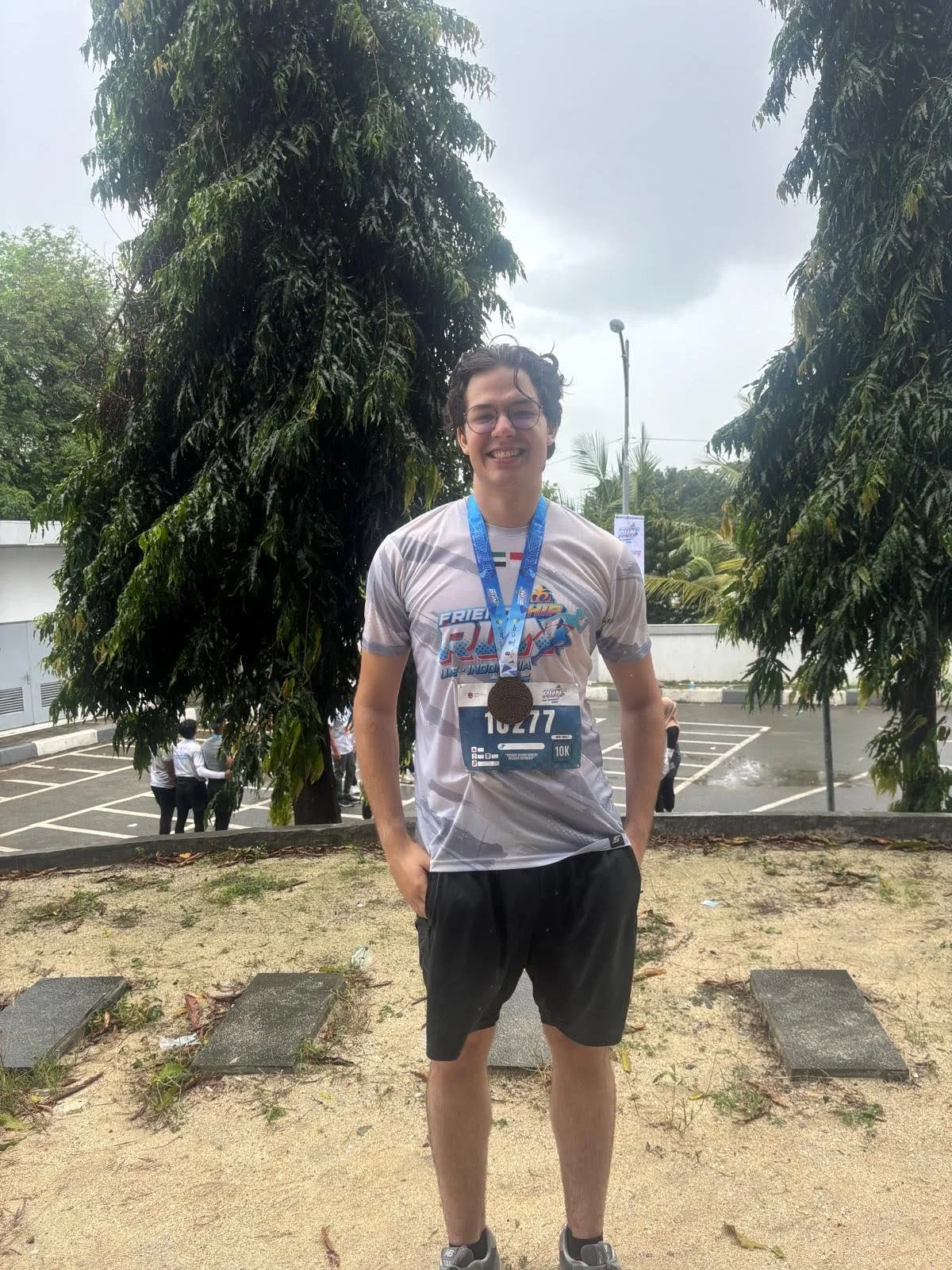
After running my first 10k
What little I was confident about was constantly challenged. Like my assuredness, earlier that morning, that I knew how to successfully navigate us out of the city. After a bright and early wake-up call at 5am, we drove through the still dark and gray streets of Banda Aceh. As we zoomed along, I fumbled with my phone’s Google Maps. Confidently, I assured Yana that I knew the way. It couldn’t be that hard to get out of the city. And after getting turned around a few times by gates still closed from the night before, we were seemingly on the right track. Or at least we would have been if I hadn’t directed our poor little motorbike onto a car-only toll road. As we approached the kiosk on this wide, empty highway, not a single other motorbike in sight, the attendant gave us a confused look. While explaining to us that the toll road is for cars only a large van pulled up behind us. Out steps a military official, who struts over to the very confused and nervous Americans. And after a tense few moments and a lot of apologizing we were finally turned around, off the toll road, and on the right path.
Such moments come with a lot of new feelings. Humility for realizing that even something simple like following Google Maps needs to be approached with fresh eyes. Embarrassment for being overconfident and misleading others. The confusion of trying to navigate a new place before dawn. And when I have long forgotten the name “Jalan Tol Sigli-Banda Aceh” (Sigli to Banda Aceh Toll Road) I will remember the terror and humor of profusely apologizing to the military as the sun rises over the sprawling highways and low fields of grass.
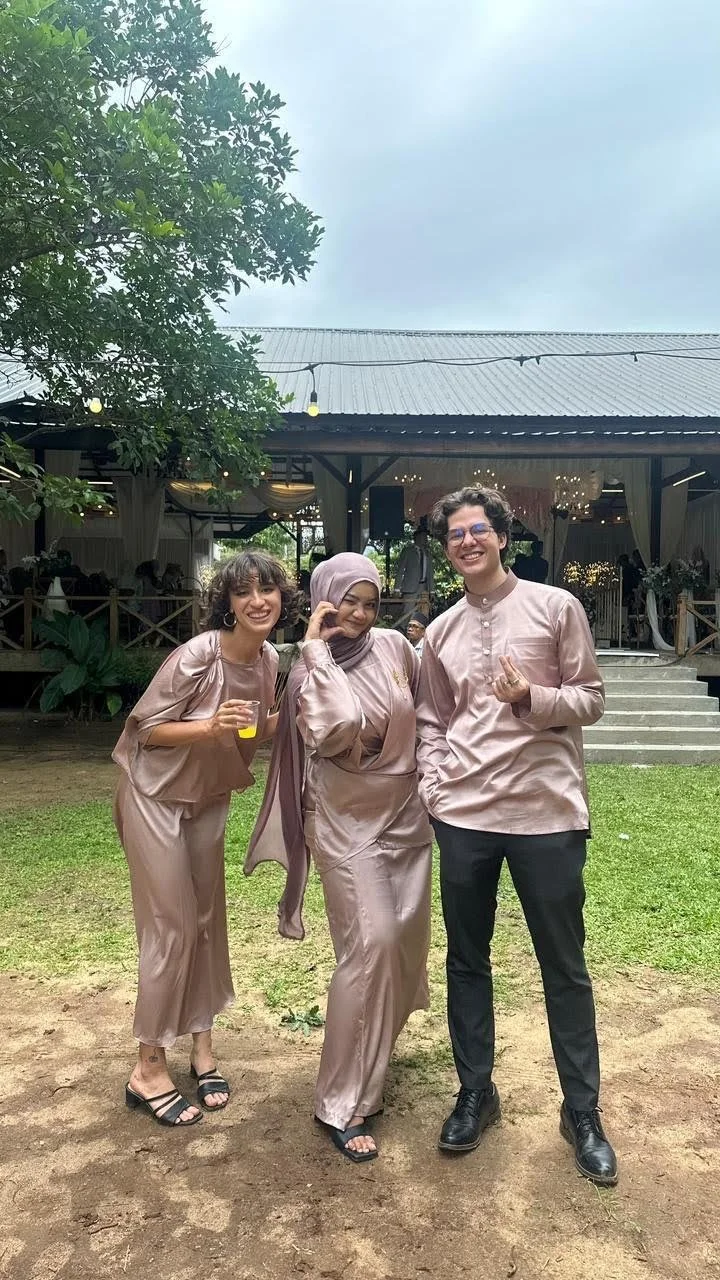
Yana, our friend Cassie, and me at the Indonesian-Russian wedding
Names are often how we orient ourselves to a new place. If you want to feel at home anywhere, you have to start by learning names. Names of that wonderful cafe with a garden by your house, of that restaurant that has the best tempe goreng, and of course, the people you see day to day, the ones who will wave hi to you as you run through your neighborhood or your coworkers who spontaneously drop by your house with bring you chocolates and sweets. To know a name is to be familiar, to be comfortable. Names are a common language. It is how we connect with place and with others. Especially, in a place like Aceh, where everyone seems to know everyone, and directions to any location comes with a list of familiar nearby cafes or landmarks. While the slow process of learning the names that surround me has made me feel more oriented, I’d be lying if I didn’t admit that it's also a challenge. For every time that I look at a menu and recognize a dish I didn’t know a month ago, there’s also a time when a student speaks up in class and I realize I’ve forgotten their name. It's an ongoing process and one that can feel overwhelming at times. And when I want so badly to feel like I’ve found my place here, a sense of rootedness and belonging, it can be deeply frustrating to realize just how far I have to go when I forget things that seem so basic.
Okay, so maybe “forget the name, remember the feeling” doesn’t quite seem like such sage advice after all. But then again, names are so much more than just some consonants and vowels. And likewise, being in a place is about so much more than having a memorized list of all the streets, restaurants, and neighbors. Names hold power, they carry deep scars and rich joys. They are weighed down by legacy and history. So what, then, does a name like Aceh mean?
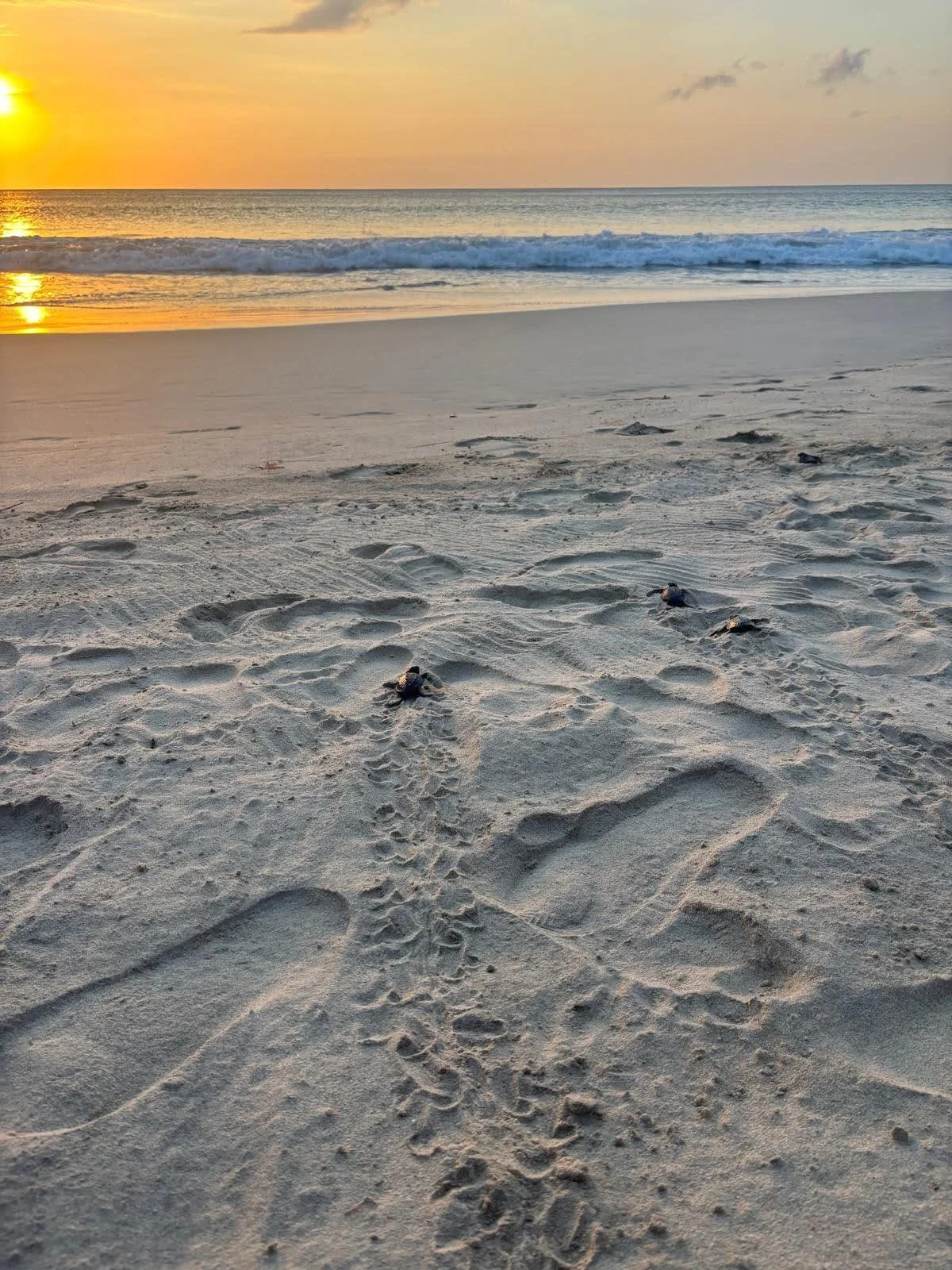
Releasing baby turtles at Lampuuk Beach
In Western media it's simple what Aceh means: the tsunami that struck in 2004 and the harshness of Syariah law. Let’s forget that name. Because while, yes, I feel both of those things in Aceh — from the massive Tsunami Museum that lies at the heart of the city to the ringing out of the daily calls to prayer — they are not everything that Aceh is. When you practice forgetting the name, as the mudflap suggests, you find students who are passionate about sharing who they are, who are hungry for community, who offer and who are open to deep connection. When you forget the name, you spend whole days at the beach doing nothing but being with friends, watching the sun follow its path until at last being swallowed by the ocean. When you forget the name, you end up as the best man for a Russian you just met in his Indonesian wedding. When you forget the name, you have friends who come knocking on your door to check on you when your power and internet has been out all week. When you forget the name, you meet people who are filled with love for this place and who work passionately to make it better.
The real challenge in being a place like Aceh is not just learning all the new names but is also learning how to forget all the expectations these names carry, how to be present in each day, how to meet each moment with openness. My best moments here in Aceh have all come from when I allowed myself to forget all the preconceived expectations and notions I had about myself and this place and embraced experiencing and being something new. Never before Aceh would I have considered myself an athlete, but I ran my first 10k here and am now training for a half marathon. Never before Aceh did I think I would work with refugees but now after having visited a Rohingya refugee camp (the reason for our journey that led to the military kerfuffle), I teach English to them online once a week. Never before Aceh did I think I would be a coffee drinker… and I’m still not but hey, I’m very very slowly warming up to it! And never before coming to Aceh did I think I would be writing my Shansi report about something written on the mudflaps of a truck. And yet here we are.
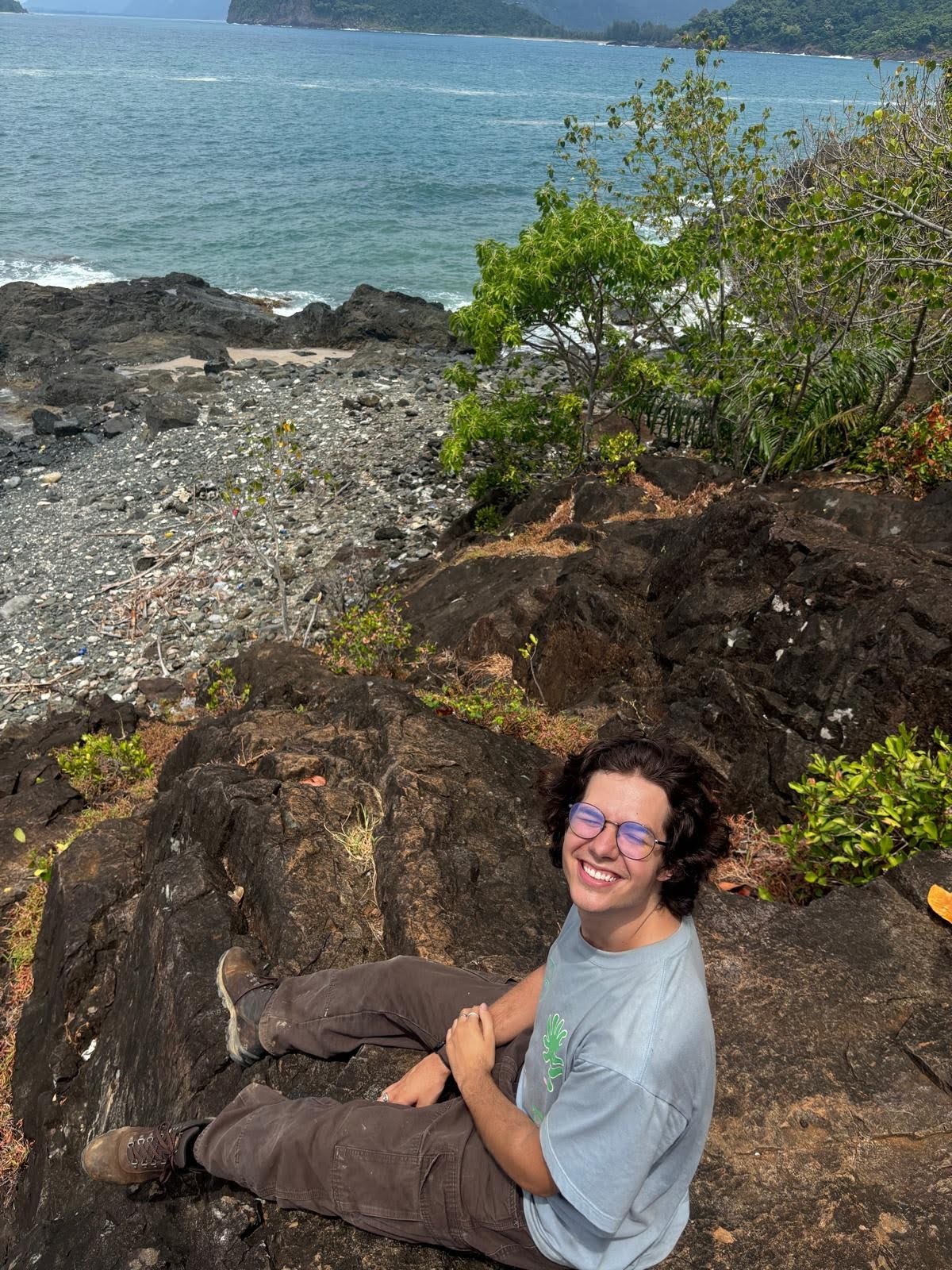
Out on a wilderness adventure
To be completely honest, I still have a long way to go. Presence is a practice and an easy one to fall out of. It takes patience and persistence. And while it's nice to have the sagely advice of some highway truck to turn to, I still have many names that I would like to remember. Names that should not be easily forgotten because they capture a feeling that is otherwise indescribable. Like having friends named “sunshine” or stealing sips of other people’s “equal understanding.”