

A Bridge Across Turbulent Waters
By Yuji Kono ‘25, Taigu Fellow 2025-2027
I grew up, like many Americans, with an image of China as a great “other” – a country on the other side of the ocean often portrayed by headlines as the main enemy we should be worrying about. Growing up Japanese-American, my internalization of China as a shadowy “other” came as much, if not more, from my exposure to Japanese media and discourse as from American media. Anti-Chinese sentiment in Japan in its various forms is something that I’ve known about for most of my life. Before I left for China, I admit that I felt a level of worry as to whether I would encounter problems when people found out I was Japanese.
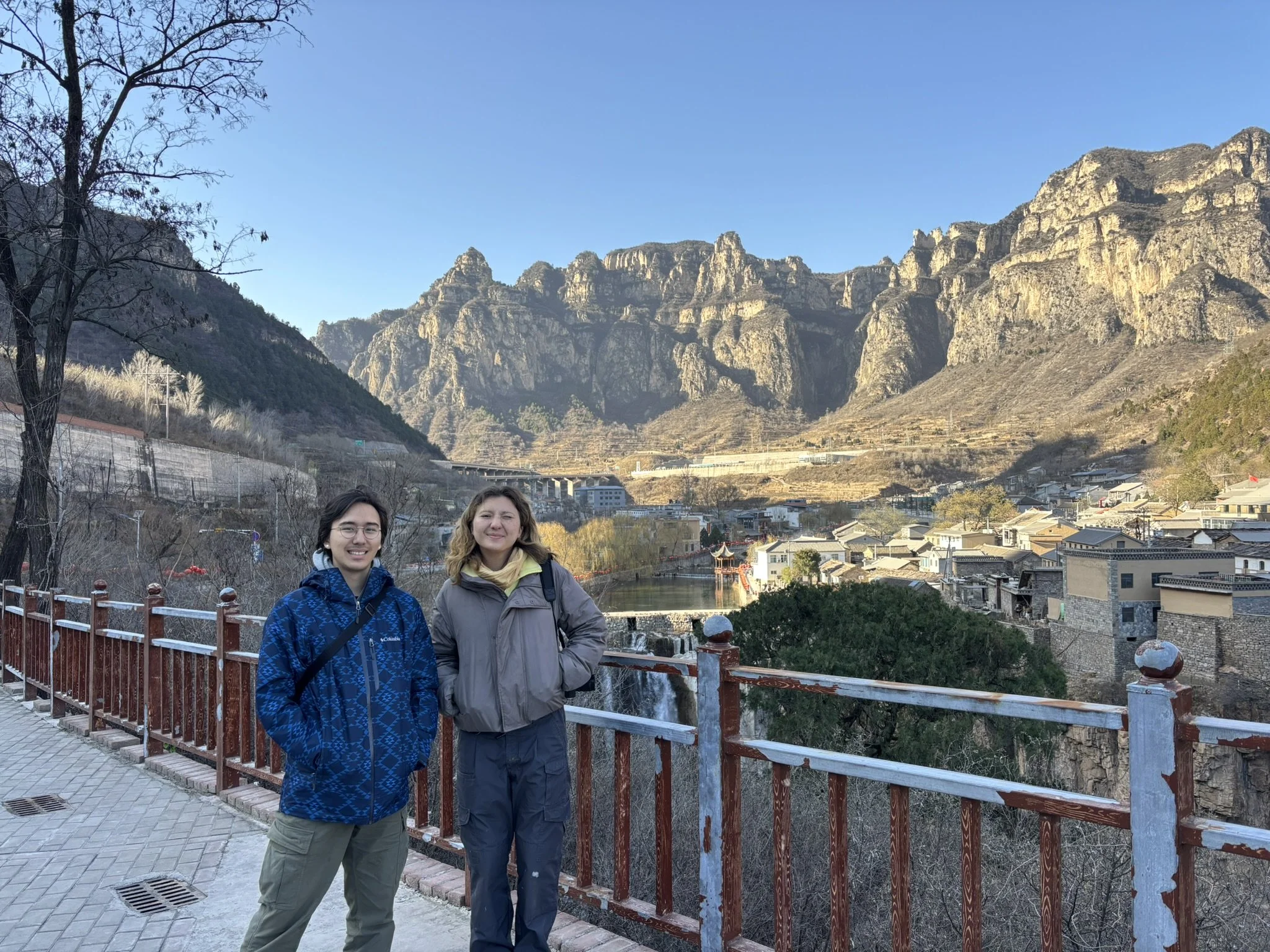
Sorah and I visiting Tongtian Xia in Changzhi, the city south of Taigu
This was one of the main reasons that I applied to go to China with the Shansi Fellowship. While I knew that so much of the negative image around China comes from its othering–often for political purposes—I wanted to go for myself and see what life was really like in a country whose image for me had been defined by its political state, with its people and everyday culture left underrepresented. I went to China hoping to, in whatever capacity I could, be a bridge that I felt was so often lacking; not just between the US and China, but between Japan and China.
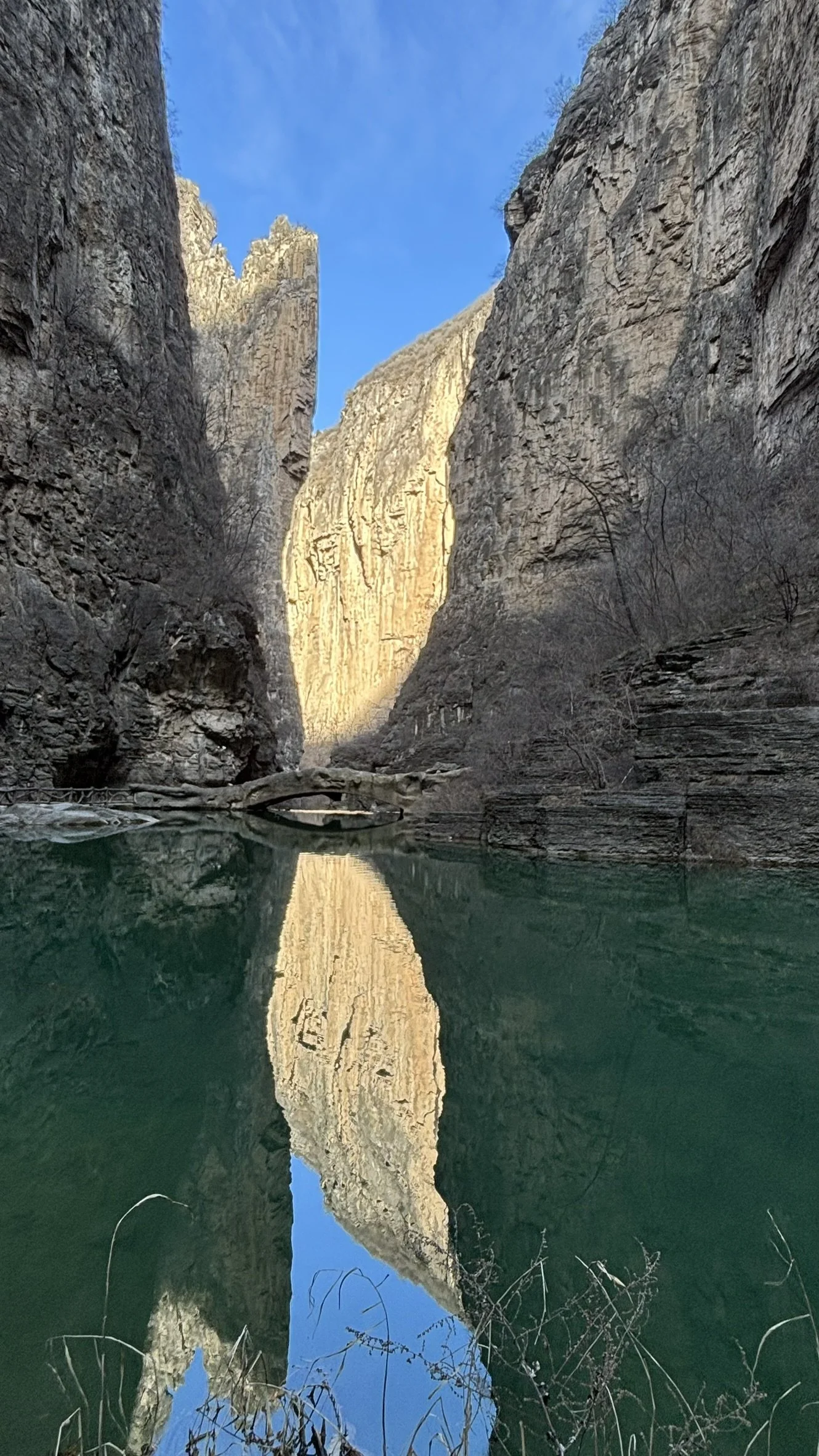
Another view of Tongtian Xia
As I write this, the rising tensions between China and Japan continue to make headlines in both respective countries, with the relationship between Beijing and Tokyo becoming arguably the worst it has been in decades. As many people now know, messages of hate and anger circulate much more easily on the internet and such messages aren’t difficult to find on my Weibo trending page or within my Japanese language social media feed. Having now finished my first semester teaching in Taigu, I can confidently identify what I see missing from the discourse I see online and the discourse I grew up hearing. When I read concerning headlines and negative social media posts, I can't help but wish there was more representation of the thing I encounter again and again in my interactions in China (and Japan): widespread goodwill, kindness, and respect toward the other country in question.
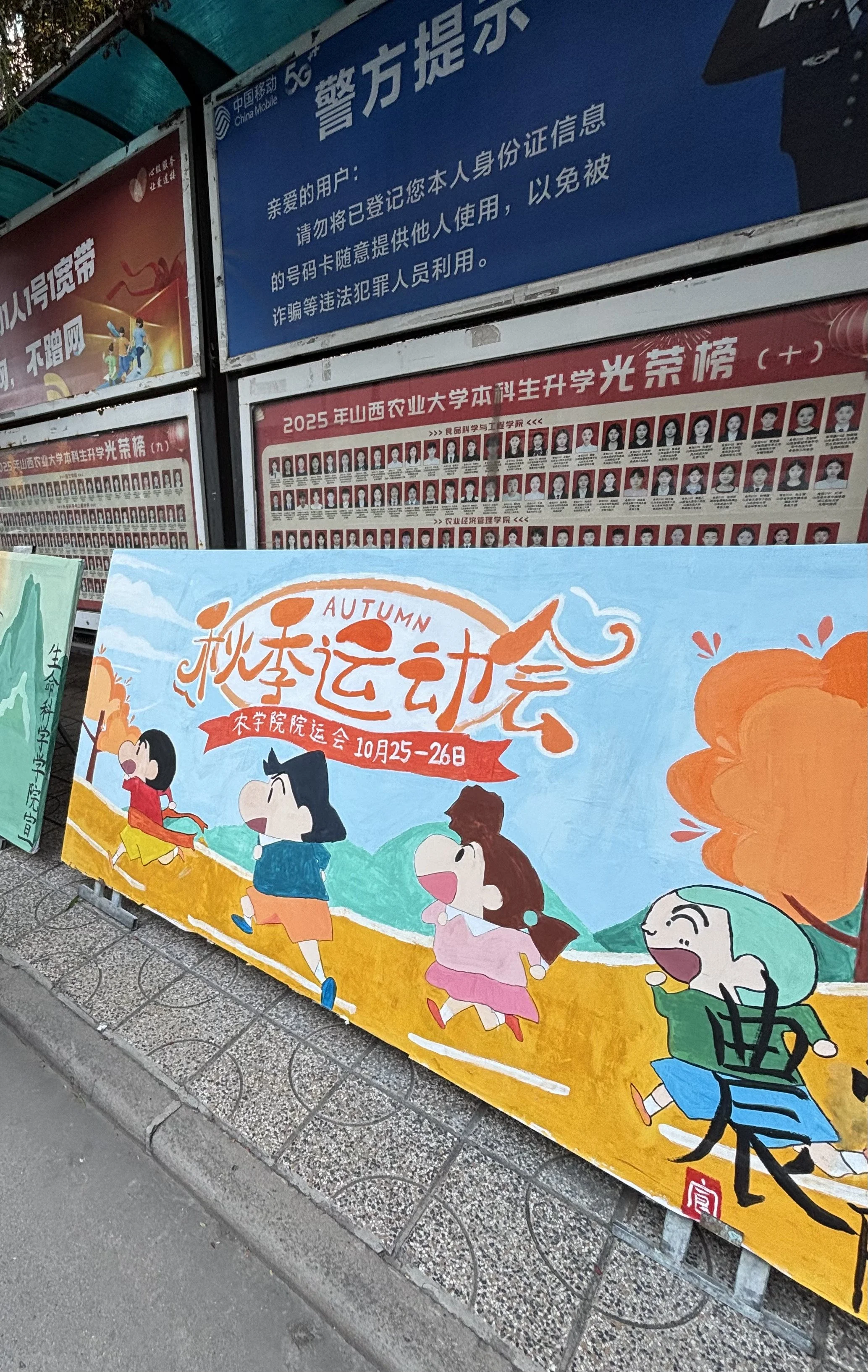
A student-made poster outside of the dining hall featuring characters from the Japanese cartoon Crayon Shin-chan. This poster is promoting a fall sports festival on campus
A few months ago, my co-fellow Sorah and I travelled to a famous gorge in Changzhi (an hour south of Taigu by high speed train). On our bus ride up into the mountains, as our driver effortlessly navigated the dizzying zig-zagging mountain roads on the way to our destination, we struggled to make conversation with him due to his limited little English and our limited Chinese. It was only on the way down that I discovered he had spent a year living on Hokkaido as a teenager, and he spoke amazing Japanese. As we conversed in Japanese, he told me all about his time working at a farm and the fond memories he had of playing guitar and growing spinach during his time abroad. Although I was high in the mountains of rural China, even here I encountered the warm connections between these two countries. Spending more time in Shanxi, I quickly discovered that these kinds of connections are far more common than I had assumed.
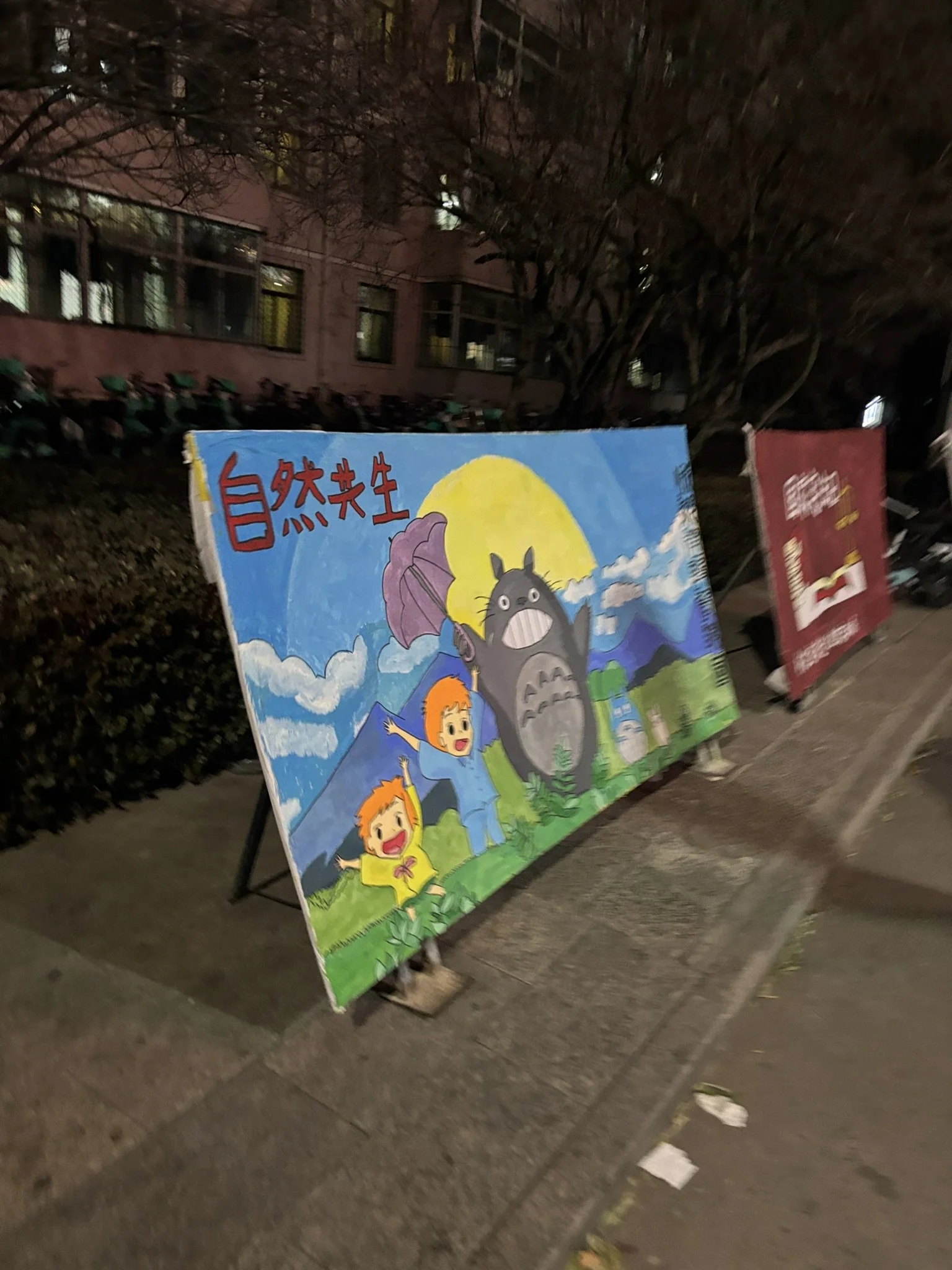
A student-made poster outside of the dining hall reading "coexistence with nature." This poster features Totoro
Encountering positive and friendly views of Japan and its people isn’t limited to my encounter in the mountains of Changzhi. In Taigu, the students I meet are much more interested and engaged with Japanese culture than I would have assumed just by reading Japanese front page news or Chinese trending Weibo topics (the Chinese equivalent of Twitter). Many of my students study Japanese in addition to English. Japanese characters like Detective Conan, Crayon Shinchan, and Hatsune Miku are almost ubiquitous; I see them on trinkets sold in stores, decorations on phones and the electric mopeds most students ride, or on Douyin (the Chinese version of TikTok).
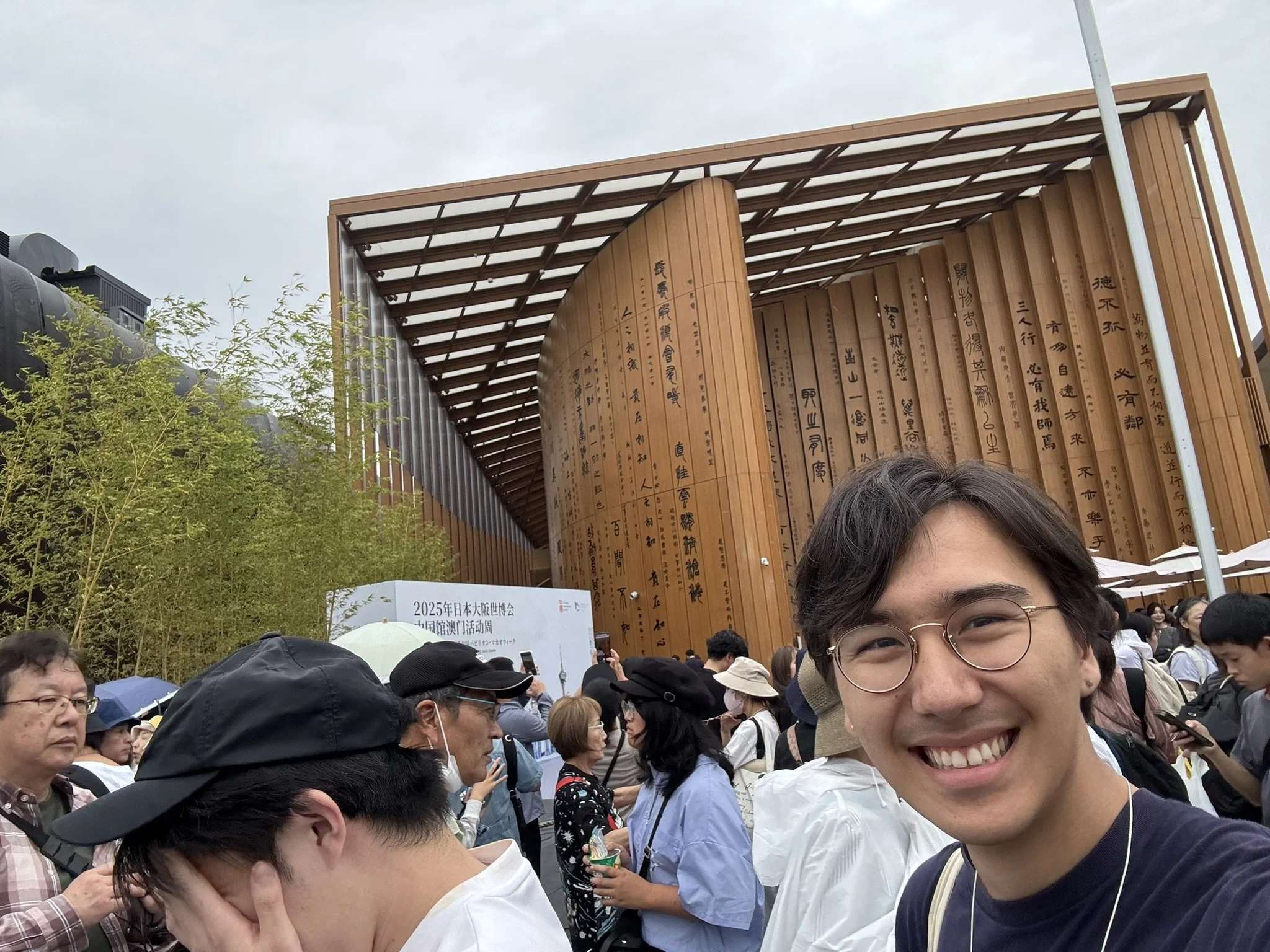
Selfie outside the China pavilion at the 2025 World Expo
During my first Taigu Fall break, I was able to spend a few days at the Osaka World Expo. For those unfamiliar with the structure of a World Expo, each participating country builds a pavilion to represent their country. Walking through the maze of national pavilions, the Chinese pavilions greeted me with towering walls made to look like the unrolling scrolls of bamboo slips used to write Chinese before the invention of paper. Inside, the pavilion opens with the theme of China and Japan’s shared writing system and roots, showing off artifacts whose inscriptions contain the earliest recorded use of words still shared and understood between the two countries today (田, 中国, and 王). Next was the “Japan-China friendship gallery,” two long hallways with carvings of the faces and names of figures who brought China and Japan closer together, from the monks who brought Buddhism to Japan, to modern artists and activists.
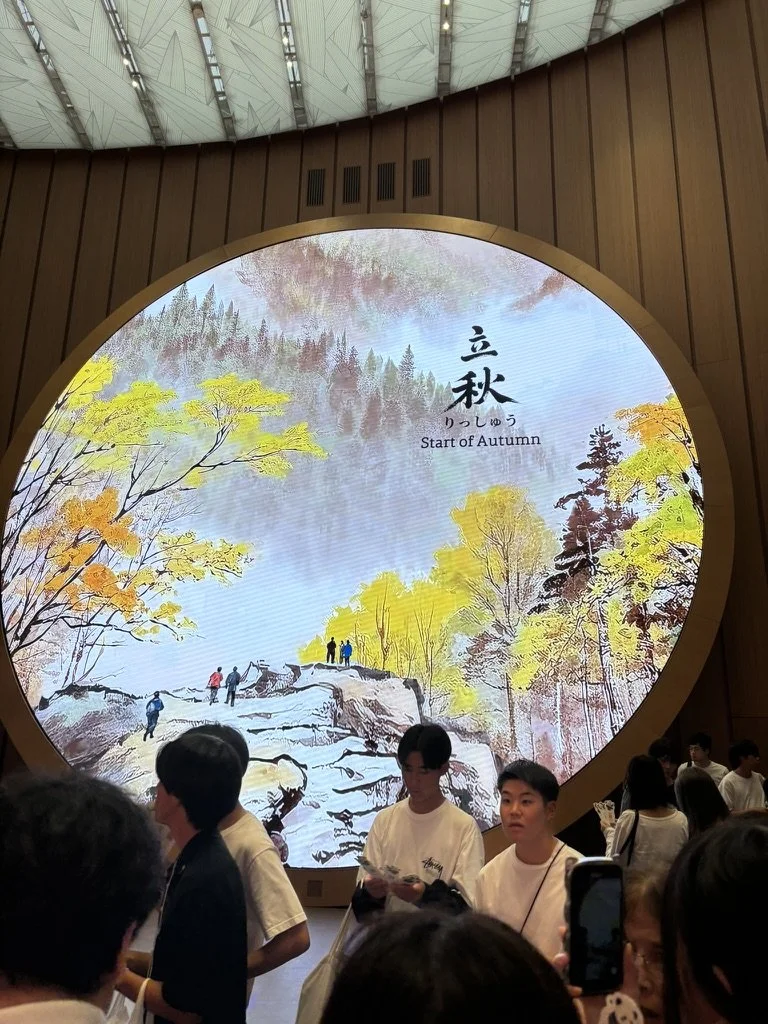
Example of one of the 24 traditional Chinese solar terms. This one is Lìqiū (or Risshū in Japanese)
When I first arrived at the Shanxi Agricultural University in Taigu, something that stood out to me were a couple of public art installations themed around seasonal division words. While I saw these 24 solar terms at first as something cool and uniquely Chinese, a few months later I learned that these were used in Japan as well, and each of these words has a Japanese pronunciation. Now whenever I pass these on campus, I am reminded of just how deep and often underappreciated this historical and cultural relationship is.
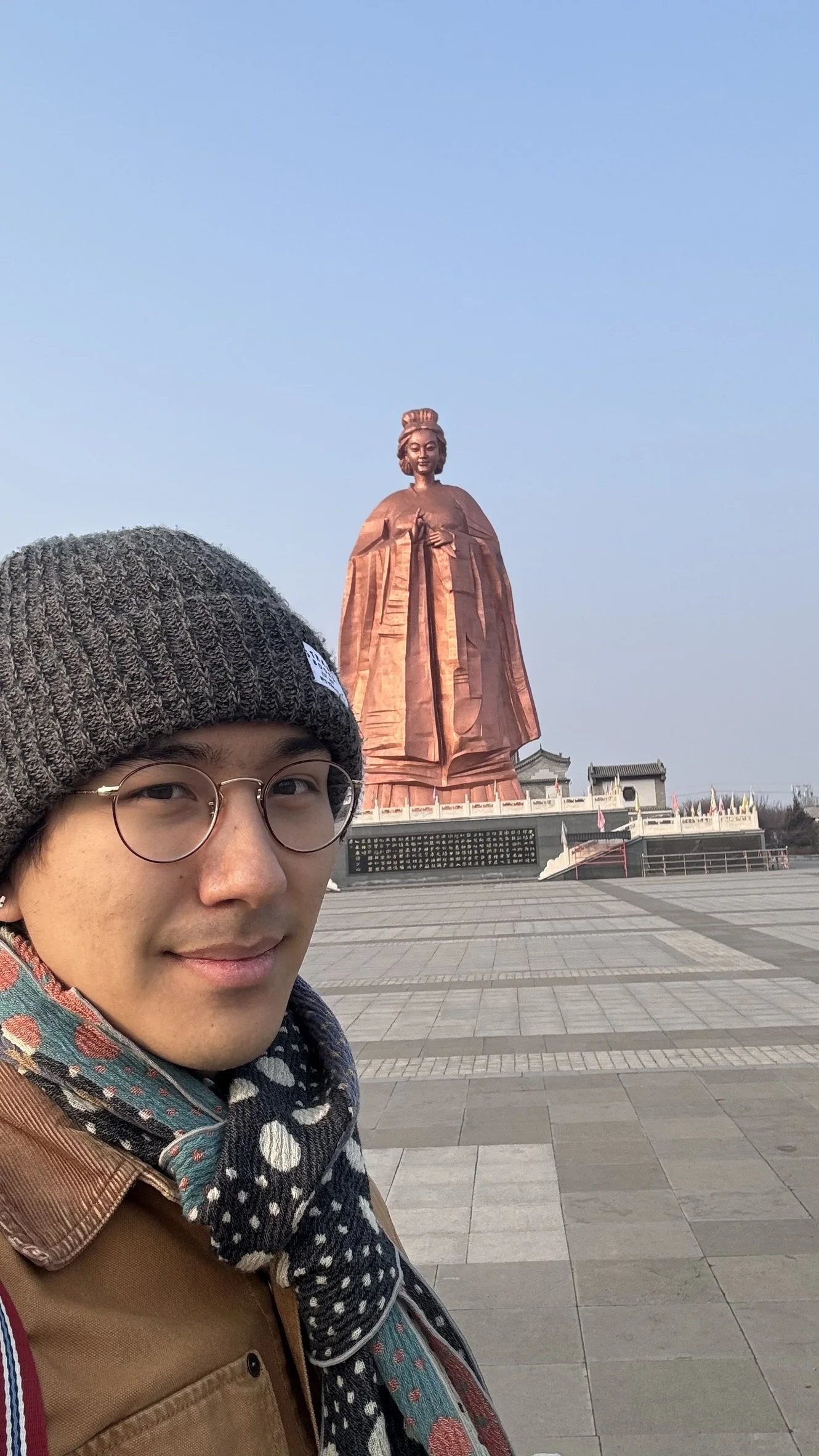
An enormous statue in Taigu of the mother of ancient conficius philosopher Mencius
While Japan and China having deep historical ties isn’t news by any means, at a time when news and media seems so keen on highlighting the divisions between these two countries, I can’t help but feel that this shared cultural bedrock should be appreciated, especially now. Walking through the Chinese pavilion, I consistently heard the many voices of Japanese visitors saying to each other “Wow, China’s really amazing isn’t it?” and “Woah, we have the same thing in Japan don’t we?” In Japan, in addition to Japanese-Chinese food (中華料理) which has already been popular for a long time, Chinese Malatang restaurants have been popping up everywhere the last couple years. This last month, during a month-long internship in Hiroshima, I met multiple Japanese people who talked about the importance of acknowledging Japanese wartime crimes and creating reconciliation.
Before I embarked on my journey as a Shansi Fellow, my main goal was to try and bridge what had seemed to me growing up as an unbridgeable gap between cultures. Now that I’m here, what I have learned is that the bridge is already there – it’s just waiting for us to cross it.