

Community, Growth, and the Art of Moving Forward After Shansi
There is no exact science to moving on after a Shansi Fellowship. We do not have a guidebook on how to process the impact of two years abroad or how to translate that impact to loved ones back home. Returning isn’t a moment. It is a process, often filled with doubt, nostalgia, rediscovery, and growth.
In the following vignettes, Paris Mercurio, Shansi Fellow to Gadjah Mada University from 2023 to 2025, writes about life after the end of her Shansi Fellowship. While she beautifully reflects on feelings of loneliness and the difficulty of putting the richness of her time in Yogyakarta into words, she also highlights community. Paris visited with her cohort after their time in Asia. Since their fellowships, they have continued to foster mutual respect, support, and friendship, even as their lives have diverged across industries and continents. This, to me, is the inherent beauty of Shansi.
Paris’s writing is accompanied by photographs and original art by Dina Nouaime, Shansi Fellow to Shanxi Agricultural University from 2023 to 2025. Through art and storytelling, Paris and Dina beautifully and collaboratively explore their lived experiences after Shansi.
Paris is currently a Fulbright Fellow in Romania. She began her new journey just months after ending her tenure with Shansi.
– A note from Ted Samuel, Shansi Senior Director
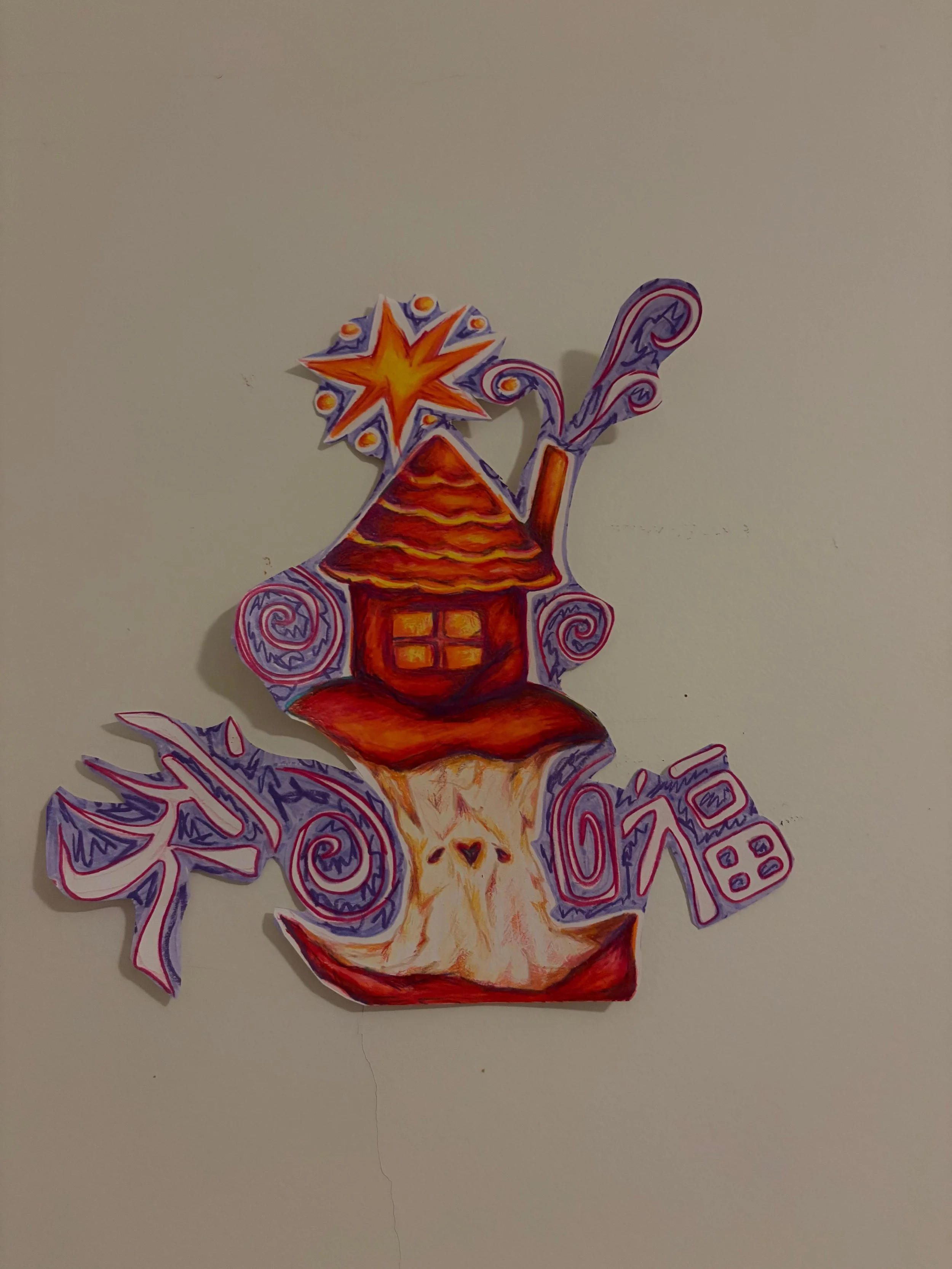
Home is an organism, by Dina Nouaime
Errands
August 2025
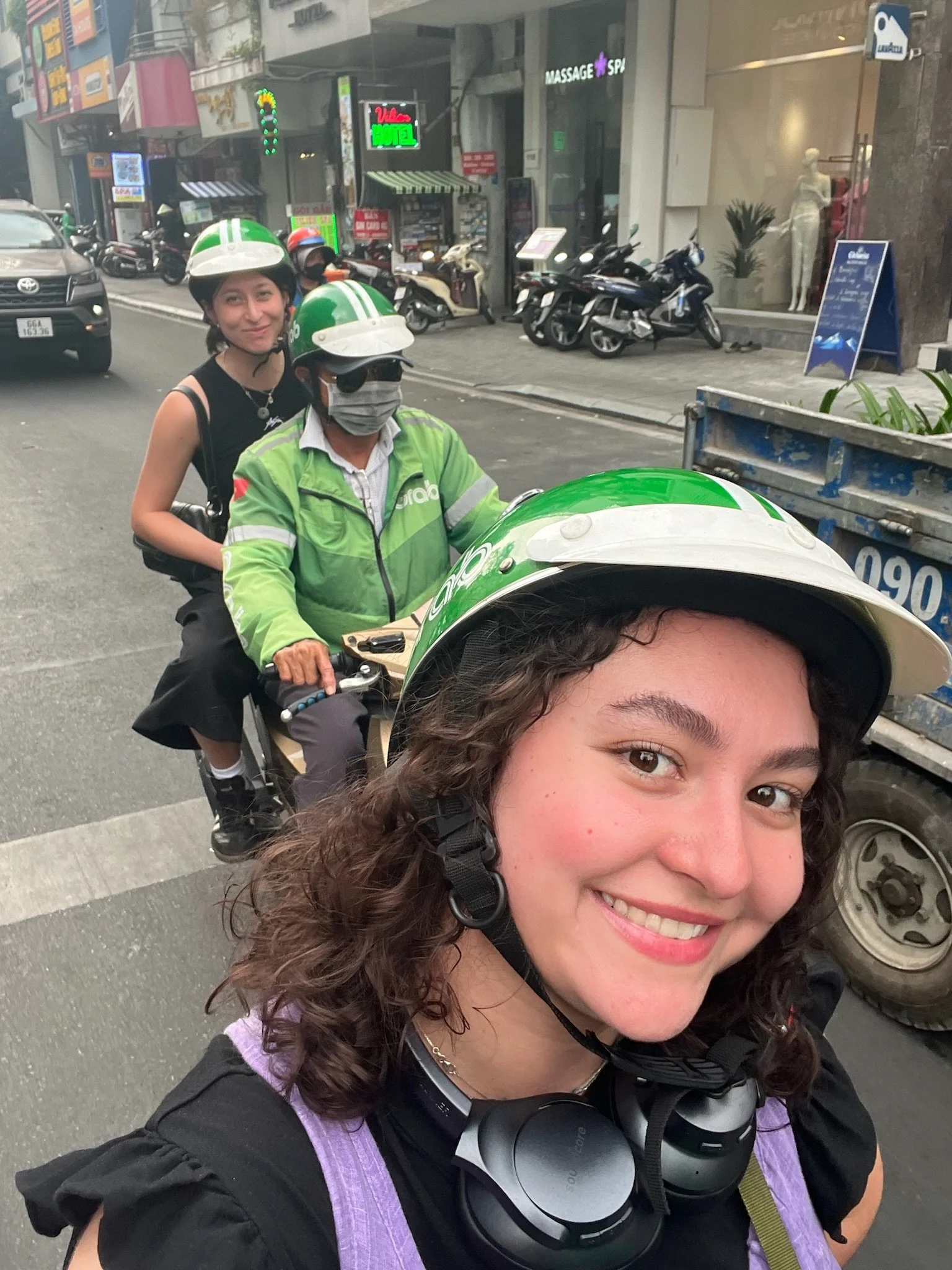
Dina and Paris's Grab bikes sync up in Vietnam
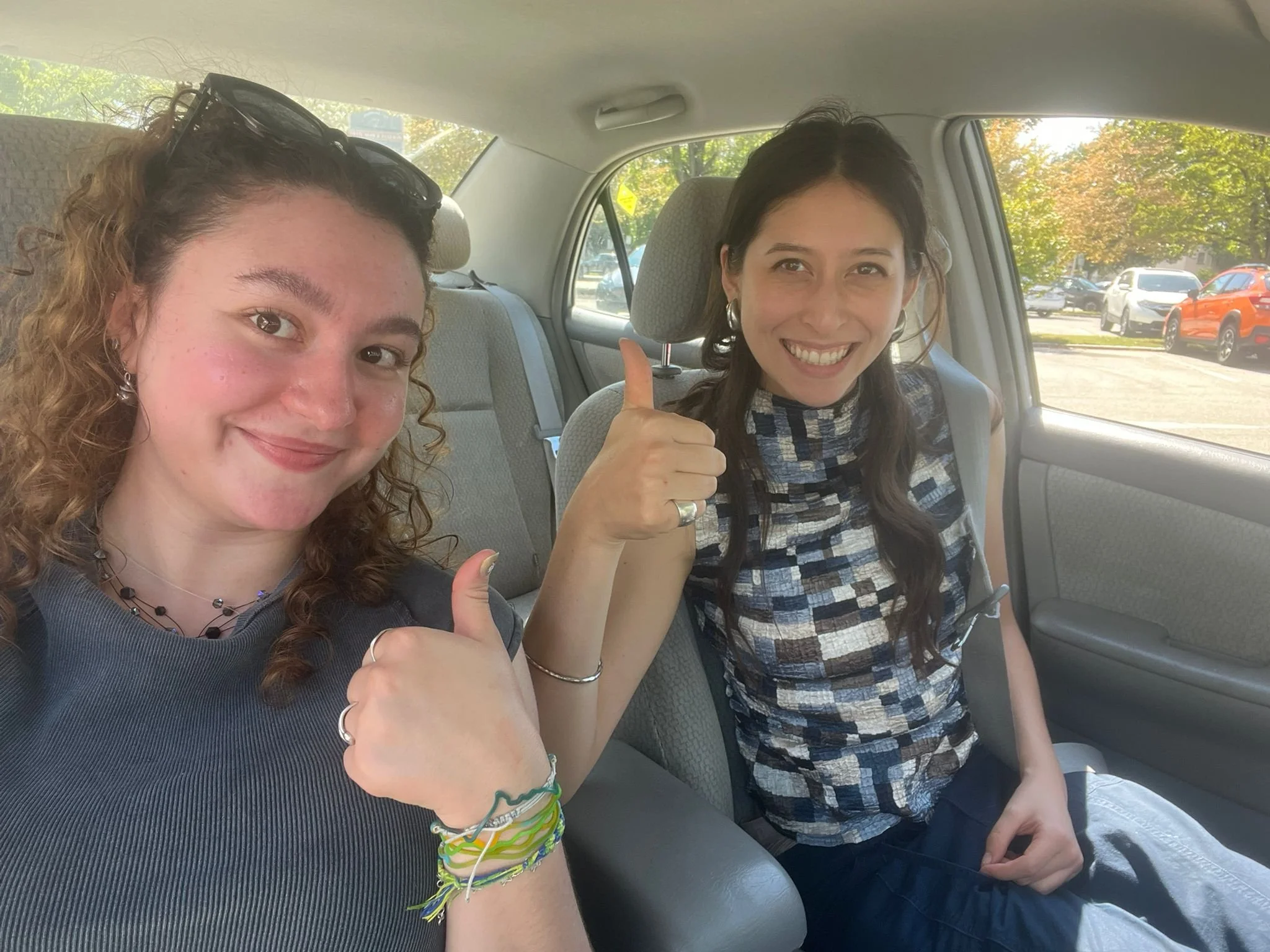
Dina and Paris run errands in Dina's car!
“Hi Dina, this is Paris! Hopefully this is still your number.
Extremely long shot, but are you in/near Philly these days? I’m making a spontaneous day trip for a concert tomorrow and I’d love to get coffee or something on the off chance you’re free!”
The drive to the Philadelphian suburbs from my childhood home in New Jersey takes an hour and a half. Though I didn’t drive at all during my time in Indonesia, it has come back to me quickly; like so much of my old routine in the place I called home for most of my life, it’s just muscle memory. I pull into a spot in the train station parking lot across from the bagel place Dina suggested, then rifle through my glove compartment in search of stray coins I might’ve left behind more than two years earlier. I pay the meter, then turn around and spot Dina from across the parking lot. We immediately notice that we’re both driving our old Toyota Corollas from high school.
Dina and I didn’t know each other well in college, but we bonded quickly while traveling around Asia together with our Shansi cohort. Six months prior, she and a few other Fellows visited Jogja before we began the final semester of our Fellowship. In the middle of a violent January rainstorm, we had caught up over spicy noodles at Mie Gacoan, a popular Indonesian chain. But today the sky is clear, so we order our bagels and sit outside. It’s late August, and still hot enough that I haven’t registered much of a change from the weather I left behind in Indonesia in June. Dina returned from China even more recently. We talk about what it’s like to be home, and while our words can only approximate the reality of what we feel, we both understand.
After we eat, Dina has to run some errands, and I decide to accompany her. After I put a few more coins in the meter, we leave my Corolla in the parking lot and take Dina’s Corolla to Staples, then Target. She points out that in the nearly two years we’ve been friends, this is the first time we’ve caught up over a mundane activity, like running errands. But we’ve still barely dug into this new, post-Shansi version of our lives here—what Dina describes as our first time being “real adults” in the States—and strangely, navigating the never-ending aisles of a Pennsylvanian Target can feel just as overwhelming as navigating a foreign city as tourists.
Dina buys a hole punch and I buy hand sanitizer. When she drives me back to my car, we put on our sunglasses and lower the front windows––a change of seasons is just around the corner, and we know we should make the most of this warmth while we can.
I’ll meet you where you are
August 2025
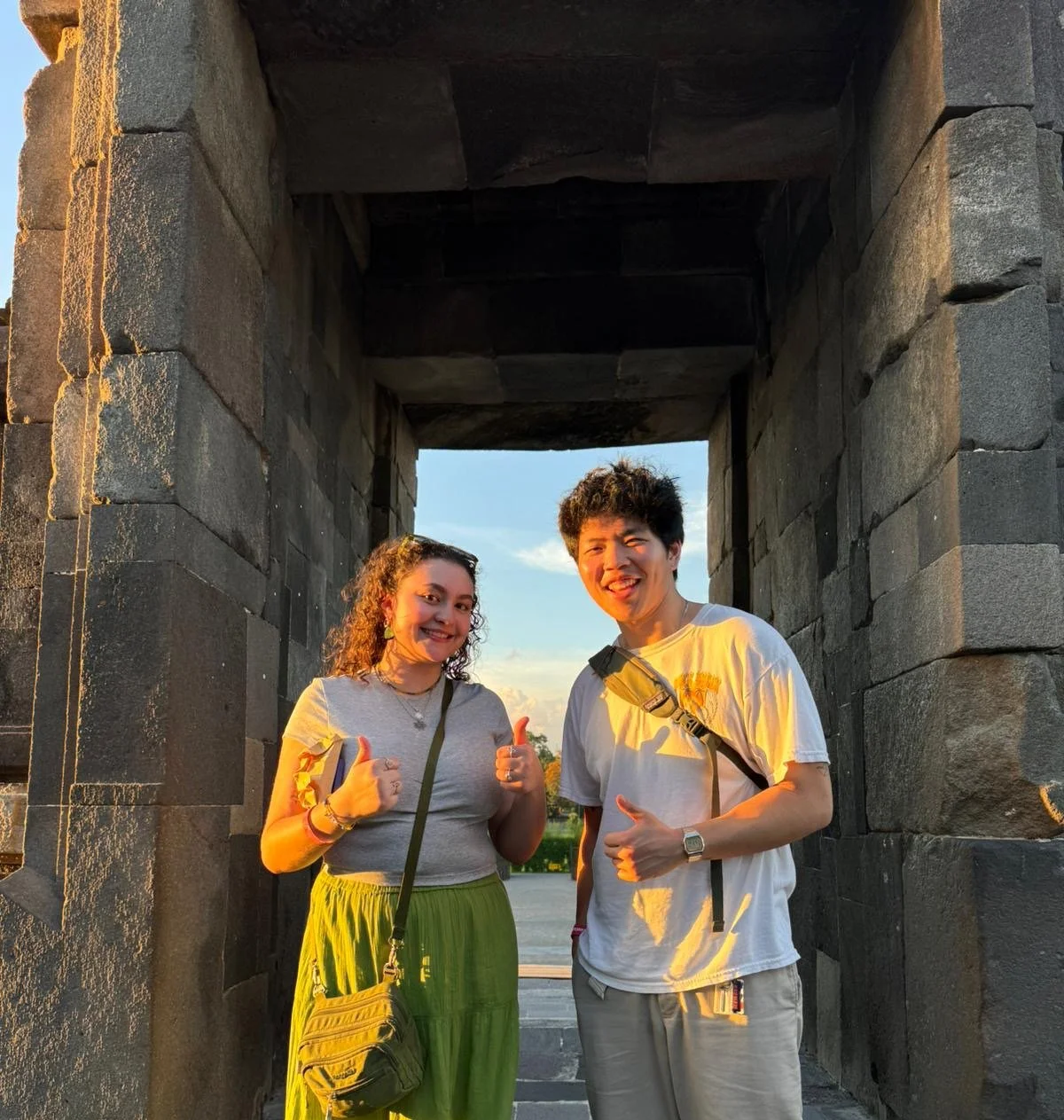
Leo and Paris visit Prambanan Temple in Jogja
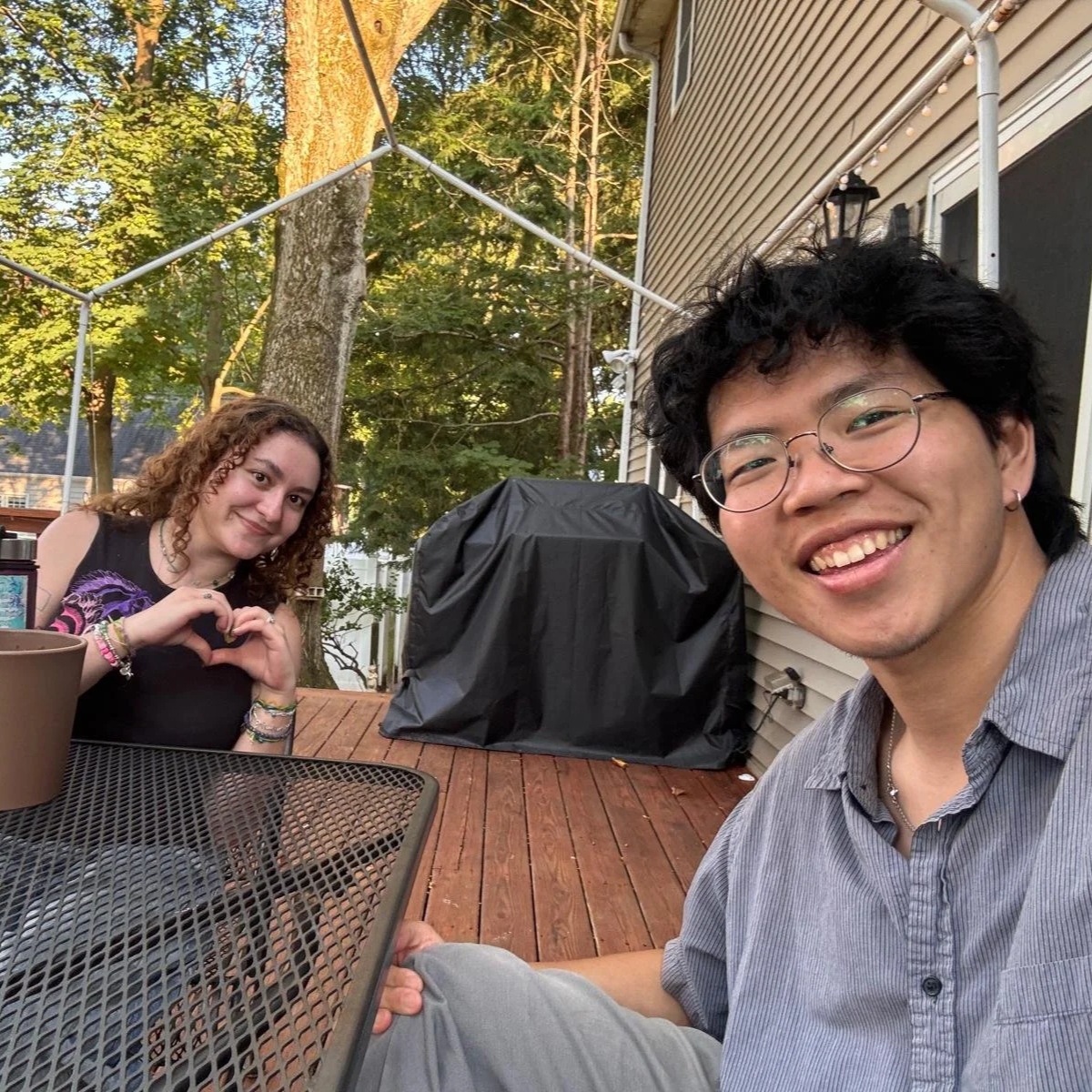
Leo and Paris reunite in New Jersey
When Leo says he wants to come visit me in New Jersey, my first thought is, why? I’ve been going back and forth from New York City all summer to see friends, anyway, and wouldn’t mind meeting him there instead. But Leo explains that being a Shansi Fellow taught him, among many other things, that no distance is too great, and that it’s always worthwhile to meet someone where they are. “I want to see what your daily life looks like,” he says.
It’s a simple enough request, but after being away for so long, I’m not sure if I even know what my daily life looks like here. I remember what it was like in high school, and during the COVID-19 lockdown, but those versions of my life in my hometown hardly translate to the person I am now.
Still, Leo’s visit becomes somewhat of a nostalgia tour. A year and a half earlier, I showed him and his younger brother around Jogja. Now, instead of exploring ancient Hindu and Buddhist temples, I take him to the artifacts of my pre-Shansi life. We visit the ice cream shop where I worked during high school, take a walk downtown, and go thrift shopping.
Soon after he left Japan, Leo began working in New York City and found himself once again living close to his friends. He felt the weight of his time away from them, and it seemed like he’d missed out on a lot: there were new inside jokes he didn’t totally get, references to trips he hadn’t been on. But there were also plenty of new parts of himself that he struggled to fully convey to his friends. There were his travels with our Shansi cohort, memories of Japan that he couldn’t quite translate. He sensed a mutual jealousy between himself and his friends––his frustration that their lives in the States had gone on without him, while in their eyes, his life had gone on without them. Both, of course, were unavoidably true.
Living in New York has also made Leo realize that people generally don’t like to commute to see their friends; even just taking the subway from one borough to another could be seen as too much of a hassle at times. But to Leo, the 1.5-hour journey from Brooklyn to my suburb was nothing. His daily commute from Machida to Tokyo had been 2 hours! He’s realized that, as Shansi Fellows, we harnessed a love and respect for one another that made distance seem inconsequential. We reunited in foreign countries, but we also made convoluted treks to visit one another at our Fellowship sites. Because there were fewer opportunities to see one another (and to see people we knew from “home” in general), we were all willing to go to much greater lengths to make those moments happen.
When Leo’s day in New Jersey comes to an end, I have no idea when I’ll see him next. It probably won’t be for a while––he’s a busy guy, and I’ll be moving to Romania in just over a month. I’m not too worried.
That was my life
November 2025
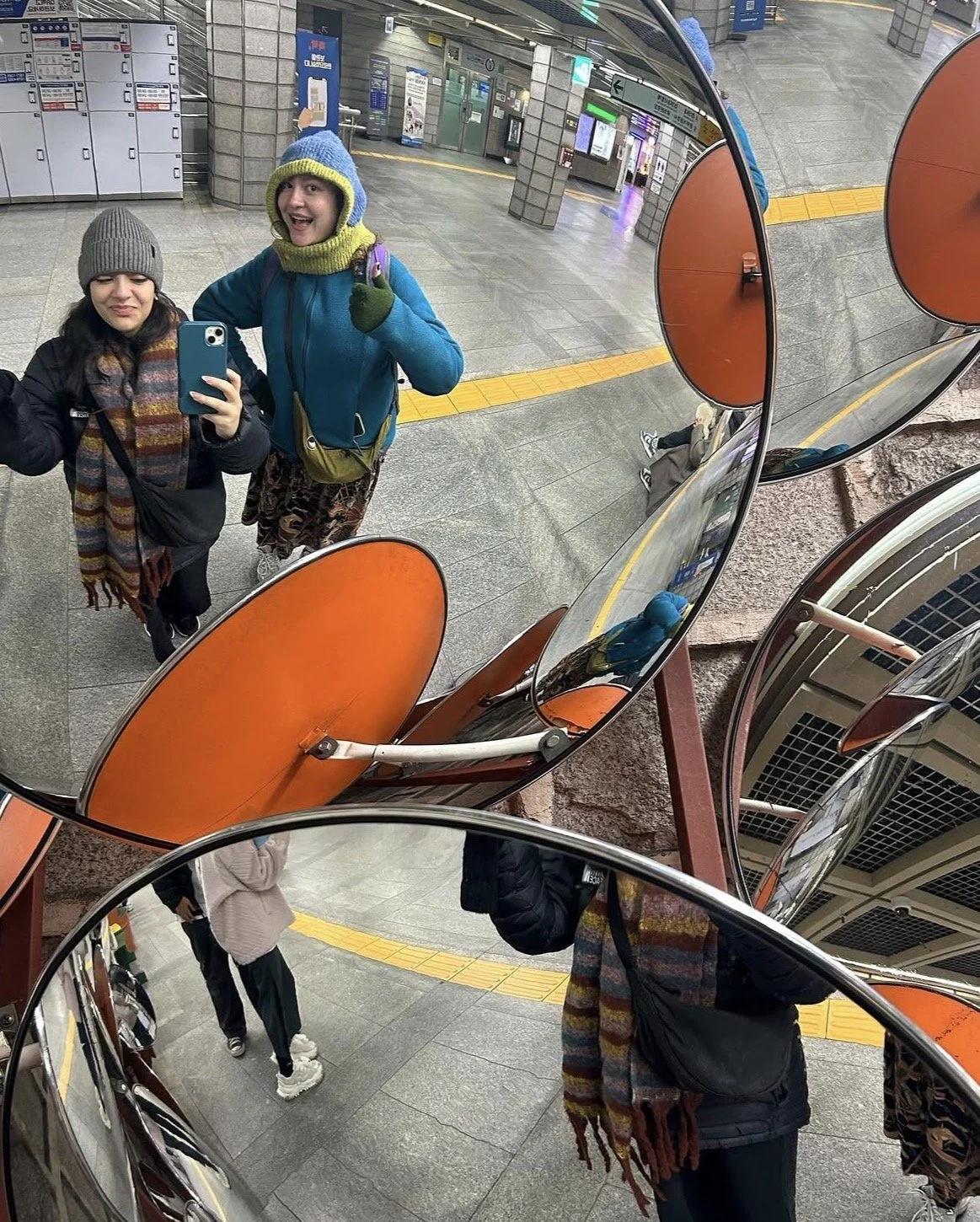
Ari and Paris explore Seoul
In early November, I take my first trip outside of Romania since starting my Fulbright grant at the end of September. I’m visiting an Oberlin friend in Paris for the long weekend, and while she’s at work, I’m wandering through the city by myself. While walking past a park, I receive a voice message from Ari; I find a bench in a shady spot and hit play.
“I went out to eat with an old friend, and she was complaining about how one of her other friends is always talking about her study abroad semester in Europe. She was going on a rant about how annoying it is when people talk about their time abroad. After she said that, I was really conscious not to share anything about my experience in Indonesia. But, this wasn’t just a semester abroad. This was my life––ugh, see? When I talk about it, it sounds so corny. But it was two years, and so much happened, and I’m a completely different person now because of it. It feels crazy that people might see it as if I just studied abroad for a semester, when that wasn’t it at all. Even if I try to express it to them, it will come across as annoying. Like, ‘No, seriously, guys, it changed my life.’”
Ari tells me about an American woman she once met in Aceh who once told her that nobody back home would ever fully understand her experience. “I believed her when she said that, but it seemed kind of dramatic. Now that I’m here, I’m realizing––I don’t know if it’s that they just don’t care, but most people just don’t ask me questions that go deeper than the surface. I still haven’t really unpacked my experience abroad with anybody besides you and other Shansi people.” (I can hear the cringe and sarcasm in Ari’s voice when she says the phrase my experience abroad.) “I don’t know if any of this made sense. You’re the only person who knows what I’m talking about.”
I record my reply:
“I’m so glad we’re talking about this. When I first got back home, I sent a text to two of my close friends. Something about how I was worried I’d be that annoying person who only talks about their time abroad. One of them responded, “It’s okay, you get a month’s grace period.” It was a joke, but I do think people expect that after a certain period of time, you’ll get over it and stop talking about it. But when she said that, even though I knew it was just a silly little remark, I thought, a month? I’ve been gone for two years, and all I get is a month?!
“We could be talking about anything that’s happened in the past two years, and it’s likely to require that added context––It’s going to start with “In Indonesia.” What ends up happening is that, by avoiding talking about Indonesia, I end up not talking about myself or my life at all. Then I feel guilty for being irritated by that, because I never want to be the type of person to dominate a conversation. But maybe because of the extra context required, it just feels like such a burden.
“And now that I’ve moved countries again, it feels ridiculous when I try to describe my issues to people. I call my mom––I’ll be like, “I’m so overwhelmed, every little thing feels really hard, I have no friends here,” and she’ll be like, “You chose this. You chose to move abroad. Again.” Consciously, I know my life can’t possibly be that rough. Here I am in Paris for the weekend, and I’m complaining about loneliness to my mom, who works weekends and takes care of a teenager. I feel stupid for having these problems, and for wanting to share them, and I know that I’m emotionally drained because of the amount of change I’ve been through.”
I hit send on the recording, stand up from the park bench, and look around. Without knowing where I’m going, I choose a direction and keep walking.
What’s next?
January & February 2026
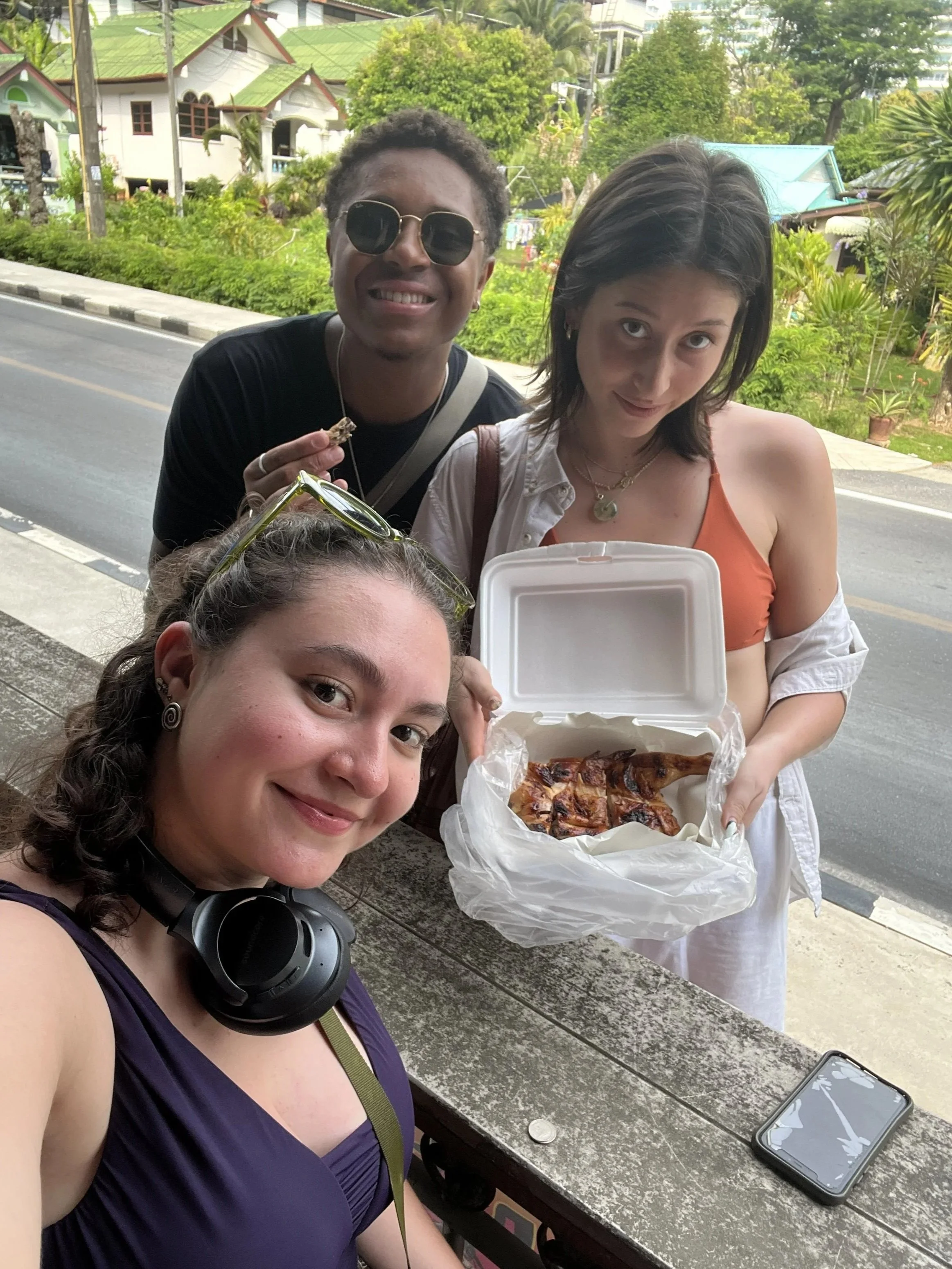
Paris, Dina, and Donnie in Thailand on the Shansi cohort's 2023 winter reunion trip
When I catch up with Donnie for the first time in ages, he’s in the middle of reading through this year’s Shansi applications. It’s Winter Term at Oberlin, and he’s alone in Shansi House, where he’s been living as the Grants and Fellowships Coordinator. He wasn’t sure how it would feel to return to Oberlin in a new context, but it has turned out to feel like a natural transition. Working with current students reminds him how different he is now from the version of himself he was before he left Oberlin.
On a separate catch-up phone call with Tiffany, she asks me, “What does processing even look like when you only have a flight to do it?” She recalls spending the 10 hours it took to fly from China to the US thinking about how much she’d miss the dogs and her friends in Taigu. On my own journey home, which took more like 30 hours, I recall crying in an airport cafe during my layover, then spending my second flight too emotionally exhausted to do any productive reflection.
Like myself and Donnie, Tiffany had only a brief period of time at home to reconnect with friends and family before starting a new chapter––in her case, graduate school. She knows that she didn’t have enough time to process the changes. “I feel like I process with people.” Tiffany’s friends and family in her hometown of San Francisco have given her space to do this, but she still finds herself holding back sometimes. “I don’t know why I do that, actually. I want to share with the people I love what was really important to me for two years.” But she agrees that there’s an ease to communicating with people who share more common ground: “There’s a certain intimacy in not having to explain the context.” She makes an effort to keep in touch with the current Fellows in Taigu, who are going through the same things she did. At home, her most impactful interactions have been with international students at her university: “Talking to someone from China is very different from trying to summarize my experience of living there.”
For Donnie, reflecting on his experience is a part of his job. An average work day might involve looking through old photos or exchanging personal stories with Shansi alumni of all ages. When he helps potential Shansi applicants envision the next steps of their own post-grad lives, he draws from his own memory and from the stories of his co-fellows. All the while, the very same question looms over his own life: what’s next?
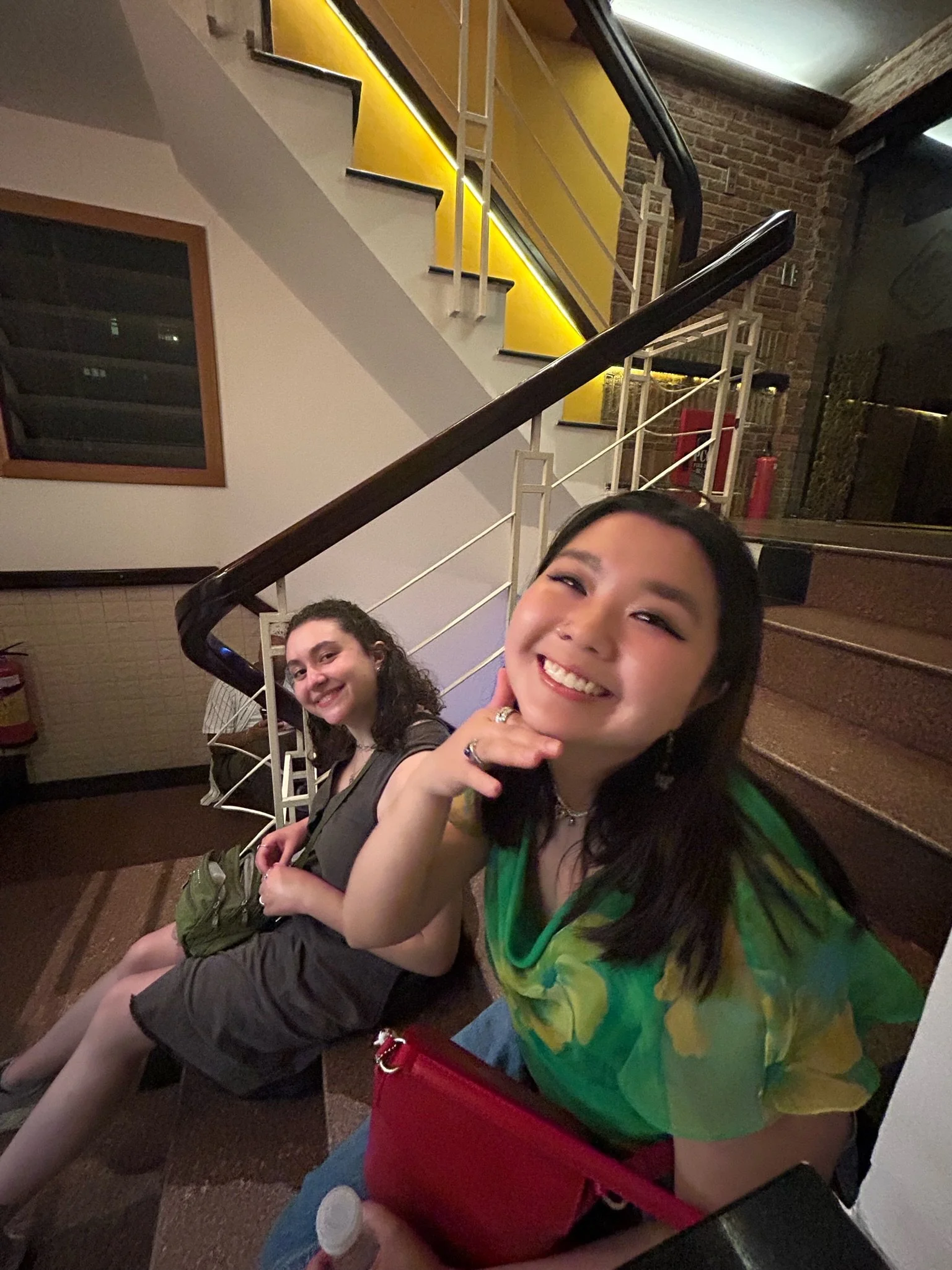
Tiffany and Paris on the Shansi cohort's 2023 winter reunion trip
A lot of Shansi Fellows seem to share this feeling of pressure upon return, as if we have to immediately hit the ground running or we’ll risk losing momentum. By the time we find our footing in one place, it seems it’s already time to figure out the next step. At the same time, we recognize the pitfalls of this mentality: “It feels like we always have to look forward and there’s no time to be present or reflect back, even though it’s so important,” Tiffany says. “And we do it to ourselves.”
We’re all quick to move on to our next adventures, developing new ideas of what words like “readjustment” and “homecoming” really mean. I hear that Anokha is finishing up her time at Keystone in Kotagiri and preparing to move to Bangalore, while Risa is leaving Tokyo for Berlin. Though I haven’t seen either of them in person since our program orientation in 2023, I still feel connected to them, all of us having watched each other’s journeys play out concurrently online.
Tiffany tells me that she recently re-read her own Shansi application, more than three years after we submitted them. She describes finding it both cringe-inducing and heartwarming––proof of how much she’s grown. “It’s like a time capsule.” Feeling inspired, I decide to re-read my own.
Living in a new place surrounded by new people, much of my Shansi experience has felt intangible or impossible to describe, reduced to a sentence-long fun fact. I can feel that I’ve changed, but I struggle to outwardly express that change or translate its meaning to the people around me. I notice myself burying or downplaying its impact when it feels too complex to unpack; later, I guiltily search for reassurance that it was in fact as real and big as it felt to me. I catch glimpses of that reassurance in my Shansi application, and in diary entries from my first few weeks in Jogja––warped-mirror reflections of the person I was before. But there is something special about processing with people: I’m grasping at a sense of reassurance that exists beyond words and past my own mind, one that can only come from the shared understanding I feel when I reconnect with my Shansi friends.
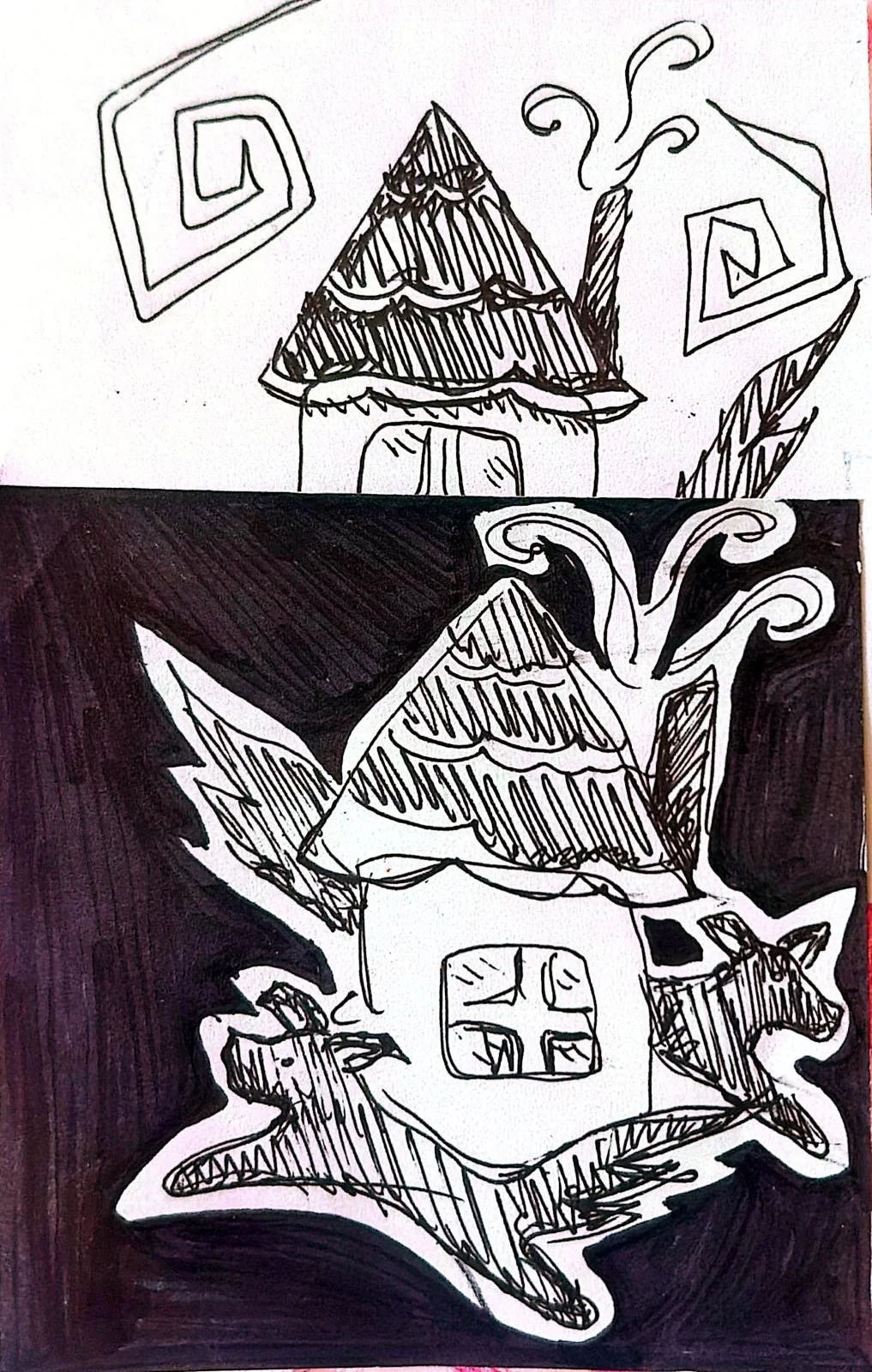
Home is where the dogs are, by Dina Nouaime